What 'Pay Annually' Actually Saves: The Real Monthly-vs-Yearly Gap
The annual discount runs from a real 55% on Headspace to nothing at all on Spotify. The monthly-vs-yearly gap for six services, read from their pricing pages.
The annual plan is the single most persuasive thing on any pricing page. “Pay yearly, save 20%,” it says, and for a second it feels like the frugal choice — right up until you realize that a discount on a commitment you were never sure you wanted is not exactly a discount. I wanted to know what the annual plan actually saves, in real dollars, across the subscriptions people actually carry, so I read the current pricing pages and put the gap in one table. The pattern in it changed how I think about the whole “save by paying yearly” pitch.
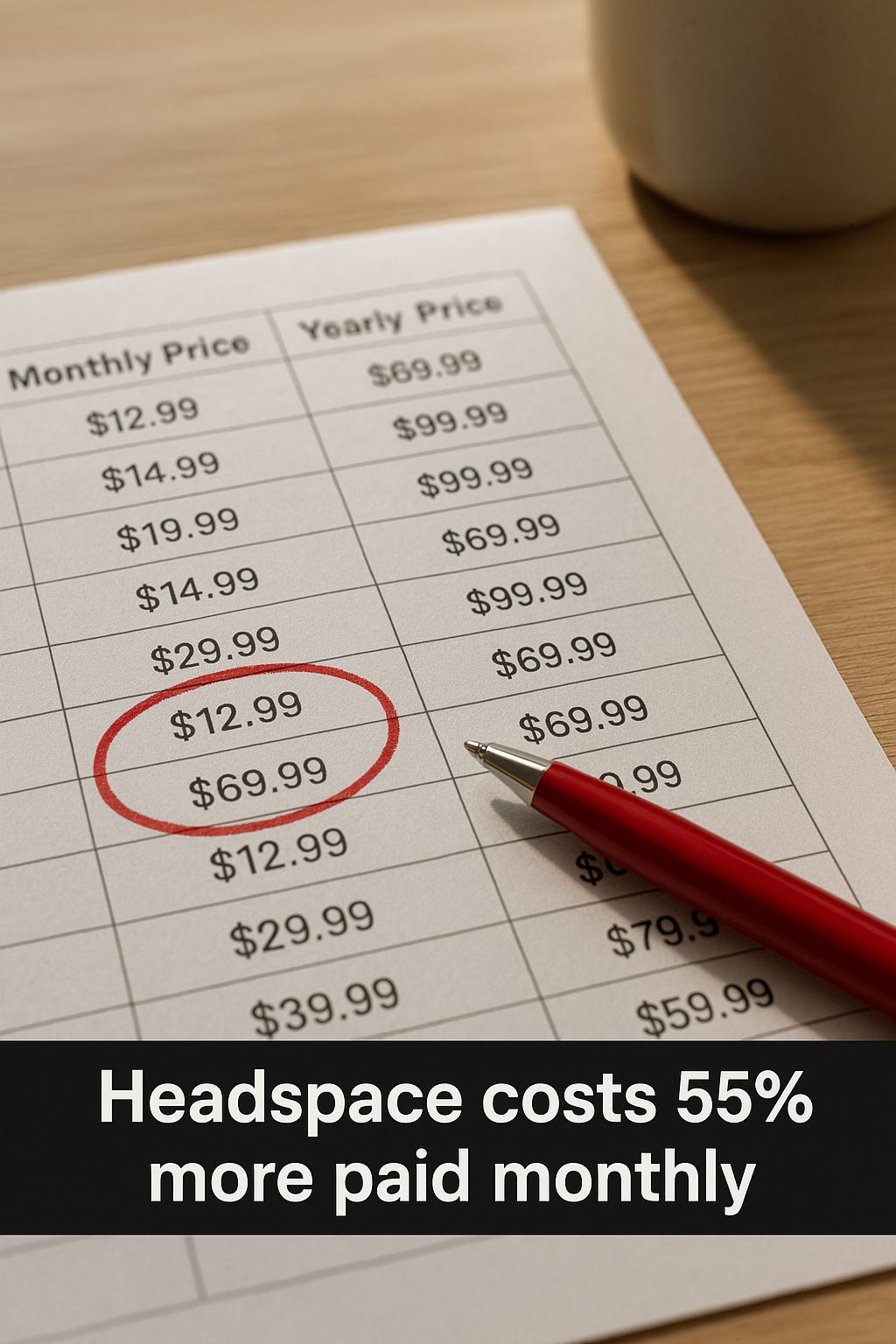
The table below is the whole point of this piece. Every number was read from the vendor’s own pricing or help page on the day I wrote this, with the billing toggle on both settings in turn. The dollar figures are United States list prices before tax.
| Service (single user) | Monthly price | Annual price | Monthly-equivalent on annual | What you save per year |
|---|---|---|---|---|
| Todoist Pro | $7/mo | $60/yr | $5.00/mo | $24 (~29%) |
| Headspace | $12.99/mo | $69.99/yr | $5.83/mo | $85.89 (~55%) |
| Notion Plus | $12/mo | $120/yr | $10.00/mo | $24 (~17%) |
| Canva Pro | $18/mo | $180/yr | $15.00/mo | $36 (~17%) |
| Dropbox Plus | $11.99/mo | $119.88/yr | $9.99/mo | $24 (~17%) |
| Spotify Premium Individual | $12.99/mo | no annual plan | — | $0 |
Checked September 13, 2026. Prices and policies can change.
Sources: Todoist pricing & FAQ, Headspace subscription plans, Notion pricing, Canva pricing, Dropbox plans, Spotify Premium (US).
The first thing the table kills is the idea that an annual plan is a single thing. There is no standard discount. Three of the six sit at a modest 17%, the kind of number that rounds down to “basically nothing” when you do the arithmetic. Todoist is a bit more aggressive at 29%. Headspace is the outlier at 55% — it is essentially priced to make the monthly option look like a mistake. And Spotify simply has no annual plan for individuals at all, which quietly says something the others do not want said out loud: the monthly price is the product.

The 17% club is where the psychology gets interesting, because 17% is exactly small enough to feel like a rounding error and exactly large enough to add up. Notion, Canva and Dropbox all land on roughly a sixth off for paying a year up front. That is not a coincidence so much as a pricing convention: it is the smallest number that reliably tips someone who was already going to stay into prepaying, without being big enough to make a monthly subscriber feel gouged. It is a nudge dressed as a bargain.
Headspace is the honest-to-god discount, and it is worth pausing on because the size of the gap is the whole strategy. At $12.99 monthly, a Headspace subscription is $155.88 a year. At $69.99 annually, it is less than half that. No one pays $12.99 a month for a full year by accident — the monthly price exists to make the annual price look generous, and to capture people who are not ready to commit to a meditation habit they might drop in three weeks. The gap is a bet that most people will not last a year, and the ones who pay monthly subsidize the ones who pay yearly.
The trap inside the annual plan is not the arithmetic, it is the commitment, and that is where the annual discount really behaves like a loan. You pay twelve months up front to save, say, $24 — but you have bought a year of something you could have quit in month two. If you quit anyway, most of these services do not refund the unused months, so the “savings” flips into a loss the moment your actual use is shorter than your commitment. The discount is only real if you were genuinely going to keep it for a year, and almost nobody knows that in advance.
Spotify’s absence from the annual column is the tell that reframes everything else. Music streaming is so churn-prone — people pause, switch to a rival’s promo, come back — that Spotify does not even offer the trap. It just wants $12.99 a month, every month, and it would apparently rather keep collecting that than trade a discount for a commitment. When a company decides an annual plan is not worth offering, it is admitting that the commitment itself is the thing being sold, and their customers will not prepay because they correctly do not trust themselves to stay.
There is a second, quieter reason to be suspicious of the annual pitch, and it is the renewal. Annual plans do not just charge you once and go quiet; the renewal date becomes an unmovable cliff that tends to land on the worst possible month. The $69.99 Headspace charge you barely noticed in March becomes a $69.99 surprise in March again a year later, by which point the meditation habit is long dead. The one-time “discount” is how you signed up for an infinite series of recurring renewals you never review.
The honest decision rule that falls out of this is simpler than any app. Compute the monthly-equivalent yourself — divide the annual price by twelve — and then ask one question: will I almost certainly still want this in month nine? If the answer is genuinely yes, take the annual plan and pocket the real discount, especially on something like Headspace where the gap is huge. If the answer is “probably” or “I hope so,” pay monthly. The few dollars you “waste” are the fee for the right to quit, and the cost-per-use math almost always favors the exit.
There is also the matter of what “save” even means when you were never going to pay the higher number. The monthly price is not money you were spending; it is the number the vendor waves in front of you to make the annual price feel like a win. If you were never going to pay $12.99 a month for meditation, then paying $69.99 a year is not “saving $86” — it is spending $69.99 on something you priced at zero. That reframing deflates most annual-plan excitement in about five seconds.
What I have ended up doing is keeping a tiny running list of my annual commitments and their renewal months, and holding everything new to a default of monthly until it has proven it can survive two consecutive months of actual use. Things that clear that bar and have a real gap — Headspace-sized, not 17% — graduate to annual. Things that do not, stay monthly forever, and the dollars I “lose” to the monthly premium are, to my mind, the price of never being surprised by my own card again.
The table above will be stale the week any of these companies nudges a price, and they all do, constantly. That is almost the point. The particular numbers matter less than the shape of the thing they reveal: an annual plan is not a category of savings but a spectrum, and the size of the discount is a signal about how confident the company is that you will stay. The bigger the gap, the surer they are that the monthly subscribers are subsidizing the annual ones. Read the gap as information, not generosity, and the “pay yearly, save 20%” pitch stops working its magic on you.
Related reading
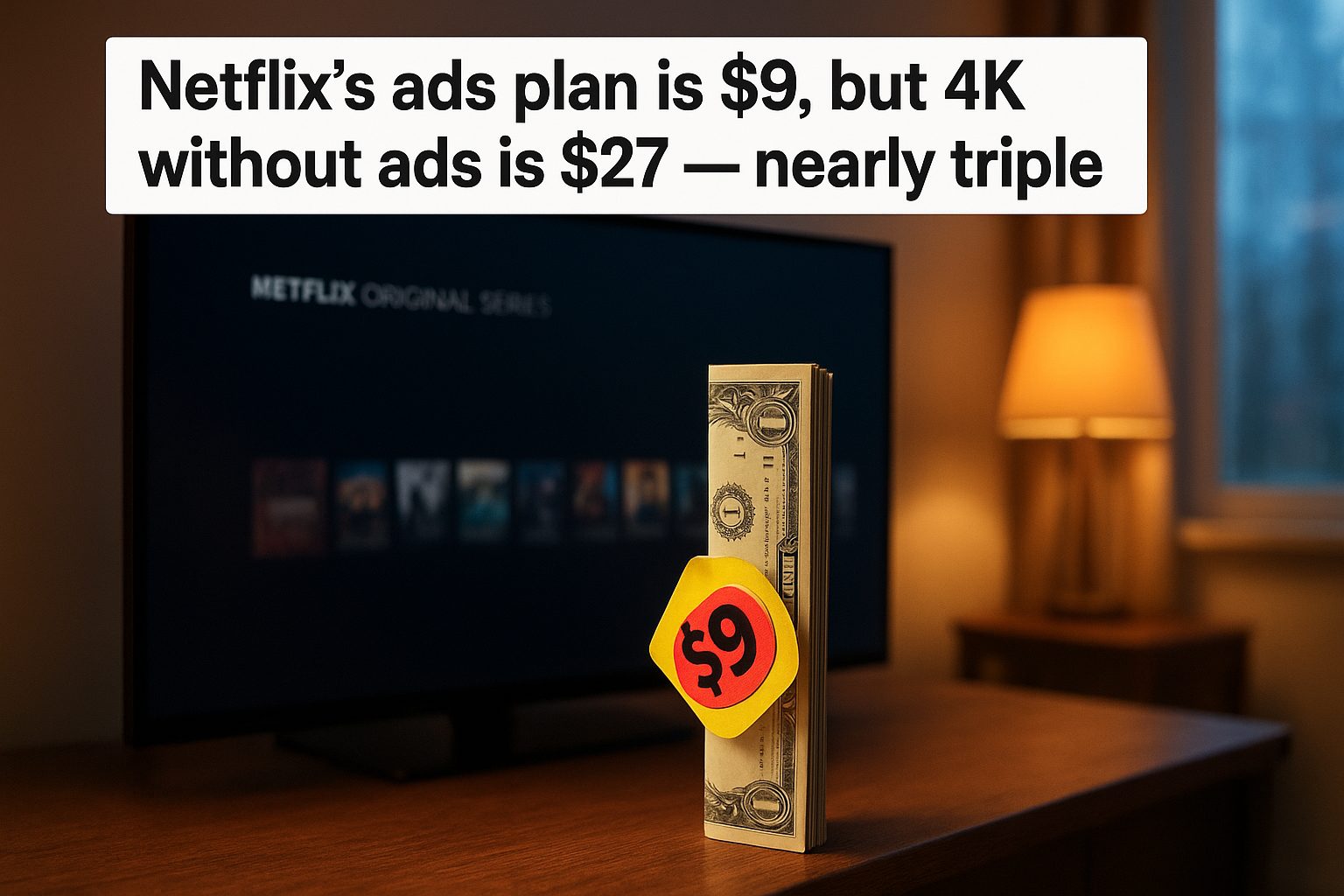
Streaming Prices: Compare Ads, 4K and the Plan You Need
Compare US streaming prices, ad-free upgrades, 4K and screen limits with official sources, verification gaps, and a worksheet for your annual viewing budget.
The Discount They Offer When You Cancel: What It Means
Retention offers explained: why firms discount only when you try to leave, what the Amazon, SiriusXM and Adobe cases showed, and a rule for deciding.
When Every Subscription Renews in the Same Month
Annual plans renew on the signup anniversary, so one busy month becomes a future month where everything is due. Which services let you move the date, checked.
Most Subscriptions Have No Turn Off Auto-Renew Button
How to turn off auto-renew on nine subscriptions: most make you cancel, Microsoft has a real off switch, and Adobe charges 50% to leave.