Security & Privacy
Encrypted Note Apps Compared: Who Can Read Your Notes, and What Each Plan Costs
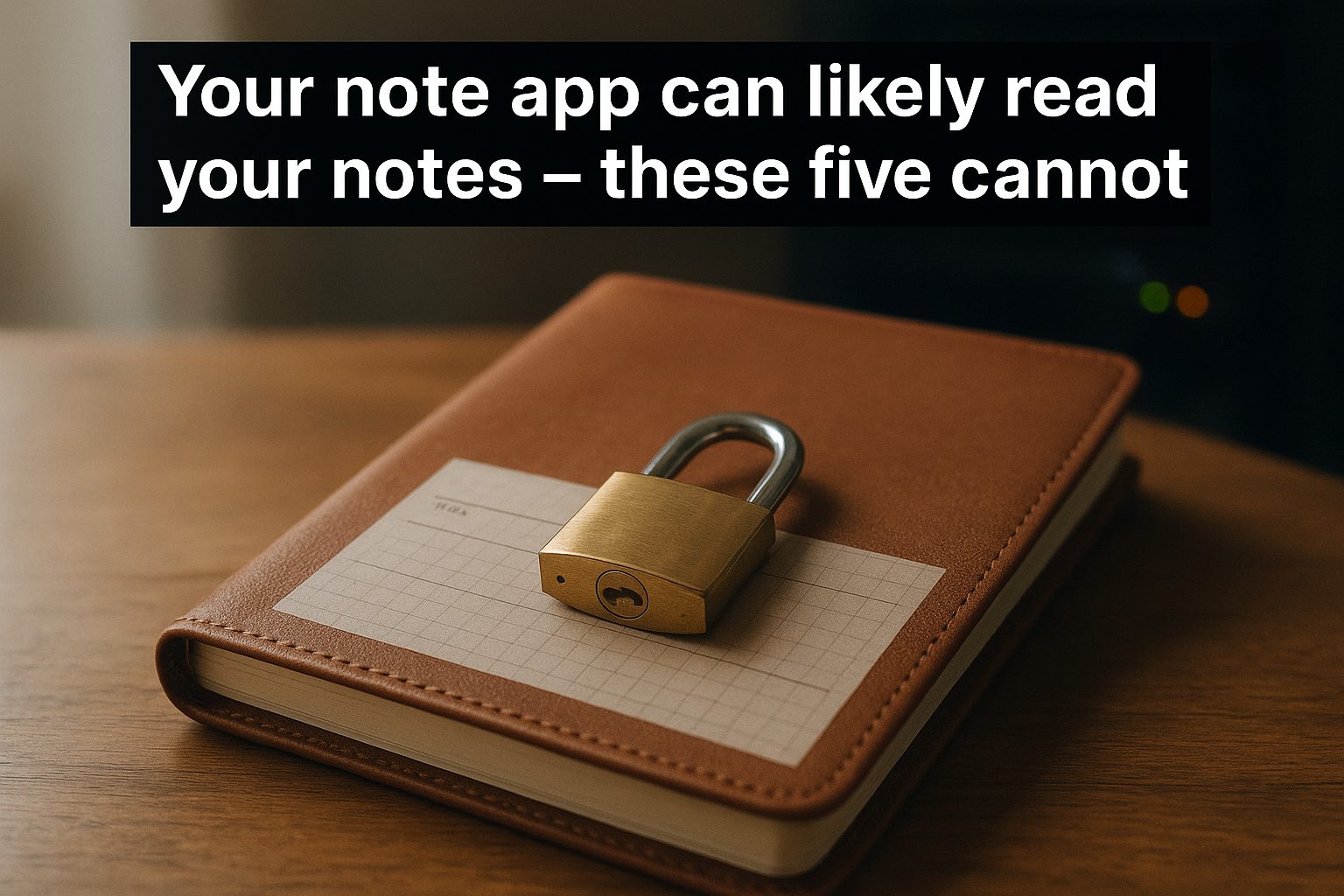
Which note apps are end-to-end encrypted, what each paid plan costs, and how you get your notes back out — five apps checked against their own pages.
Hardware, software and the things they quietly cost you — what the pricing page and spec sheet leave out.
Which note apps are end-to-end encrypted, what each paid plan costs, and how you get your notes back out — five apps checked against their own pages.
Seven password managers compared on free limits, annual price, zero-knowledge encryption, and export, checked against each vendor's own pages.
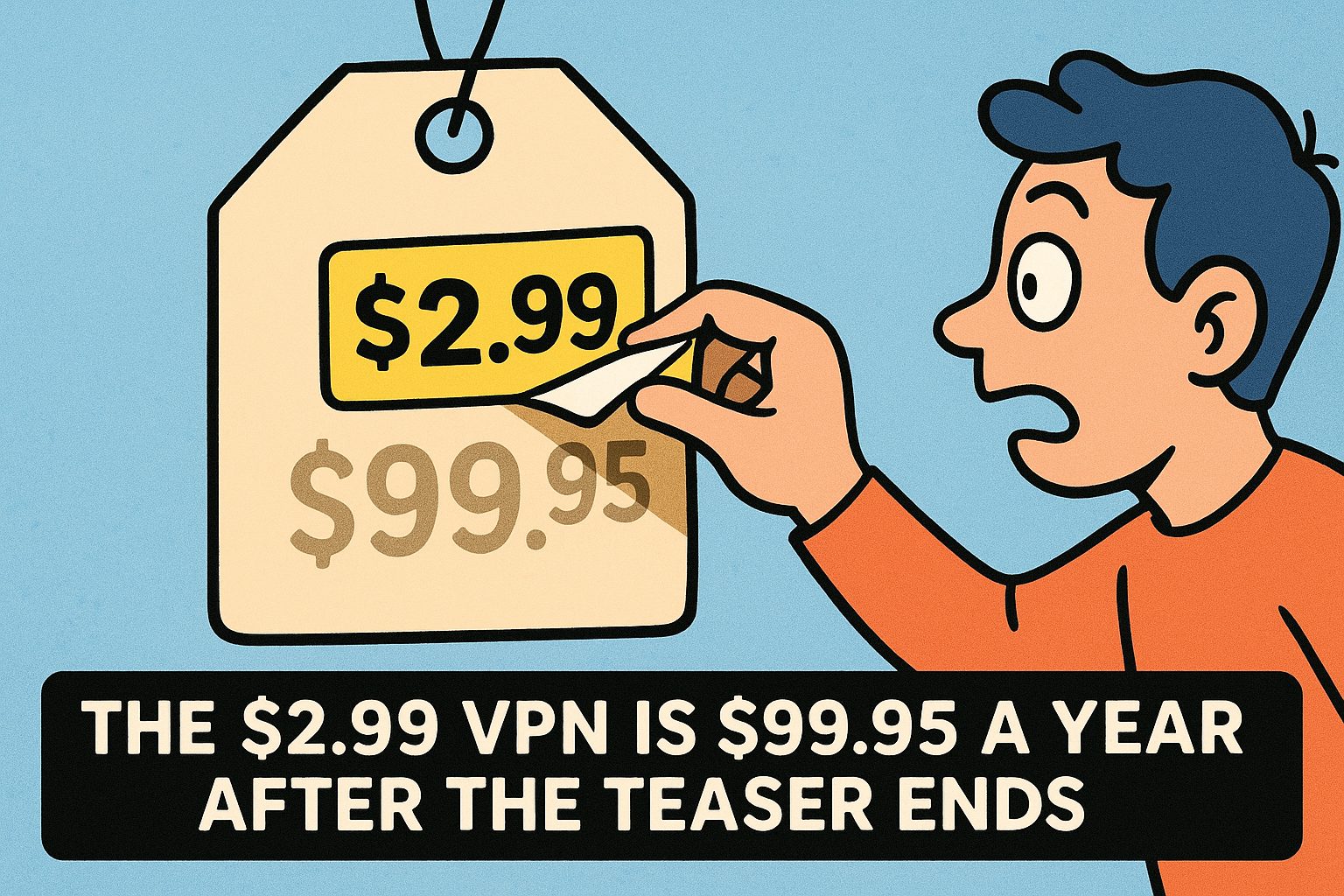
Seven VPN providers compared on real prices, device limits, logging policies, jurisdiction, and refund windows, checked against each vendor's own pages.
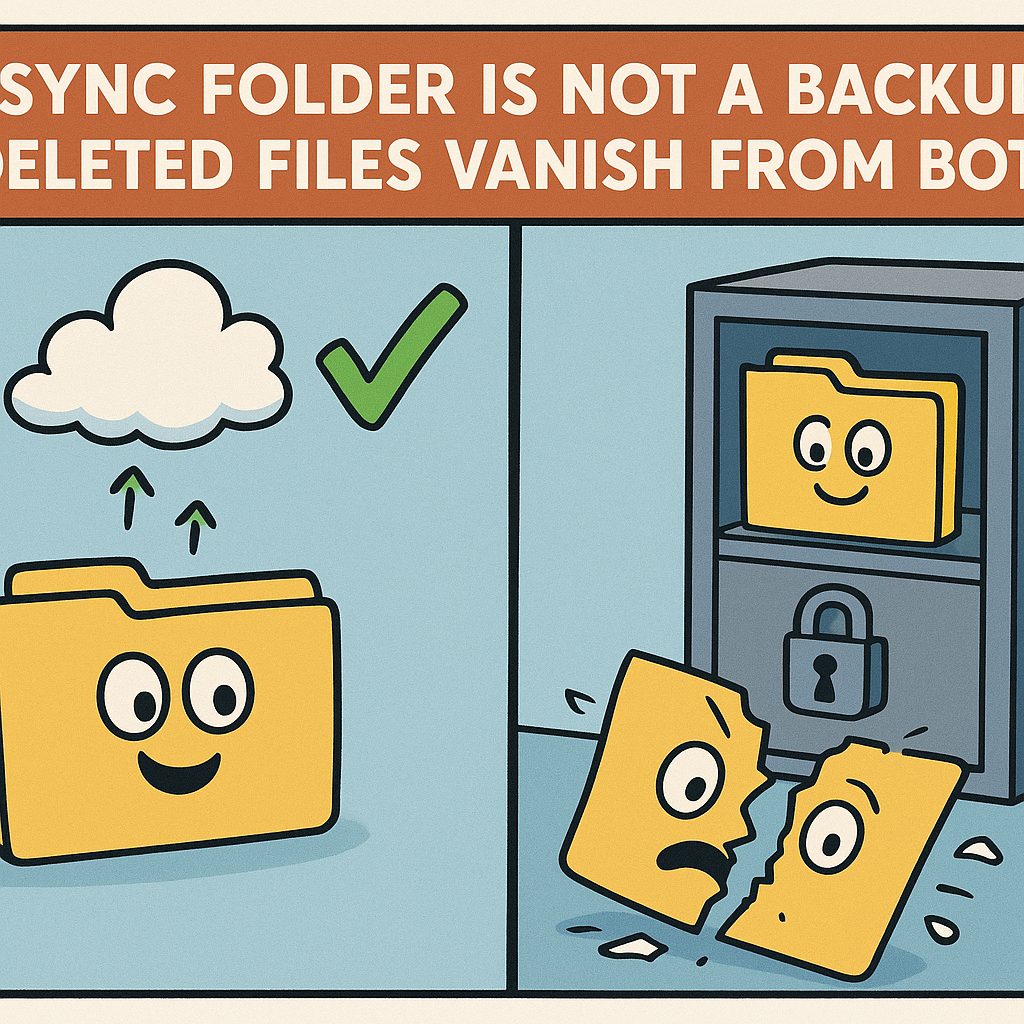
Six backup services compared on price, encryption, version history and restore — and why a synced folder is not a backup.
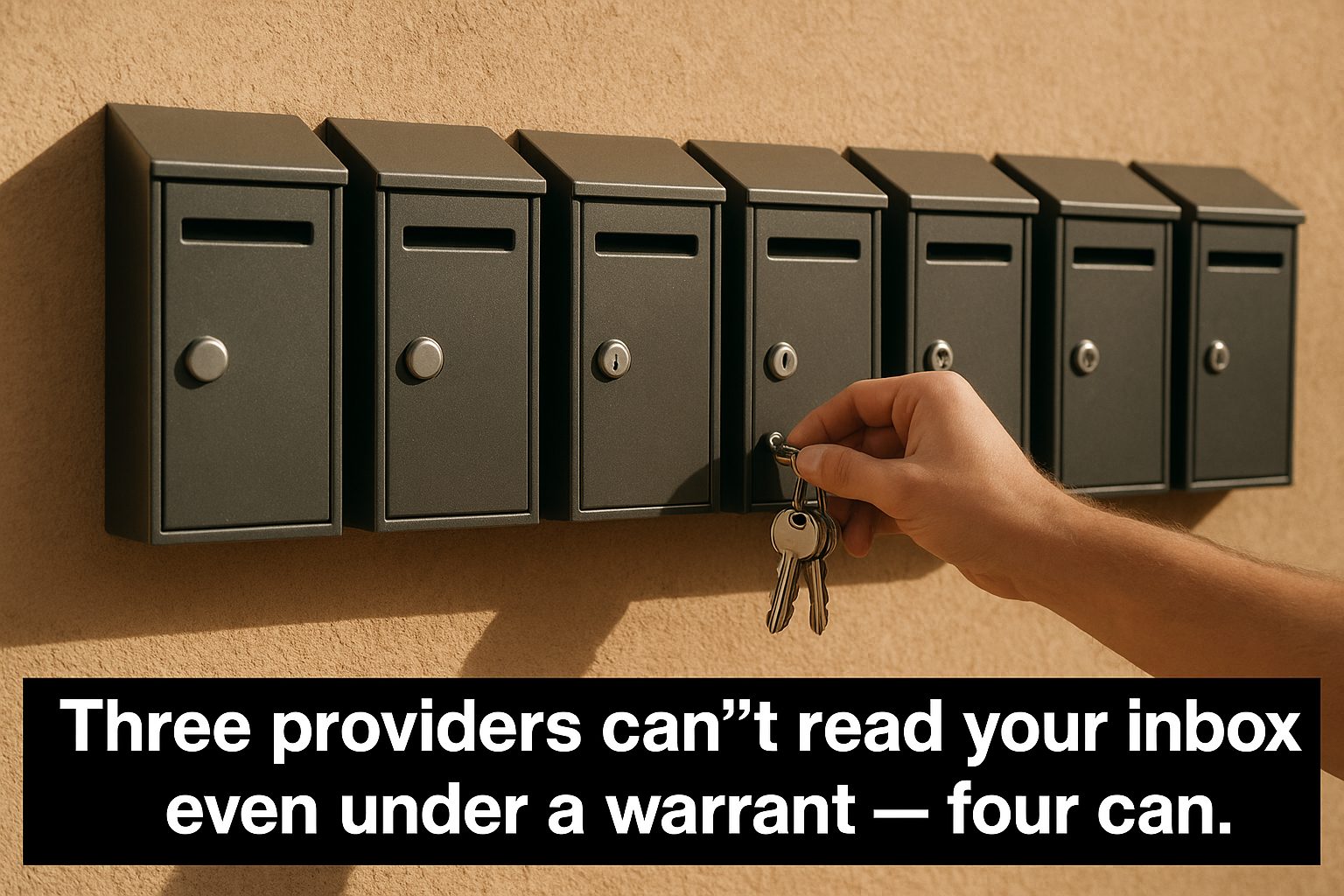
Most email is encrypted in transit, but only some providers cannot read your inbox. Seven services compared on price, storage and who holds the keys.
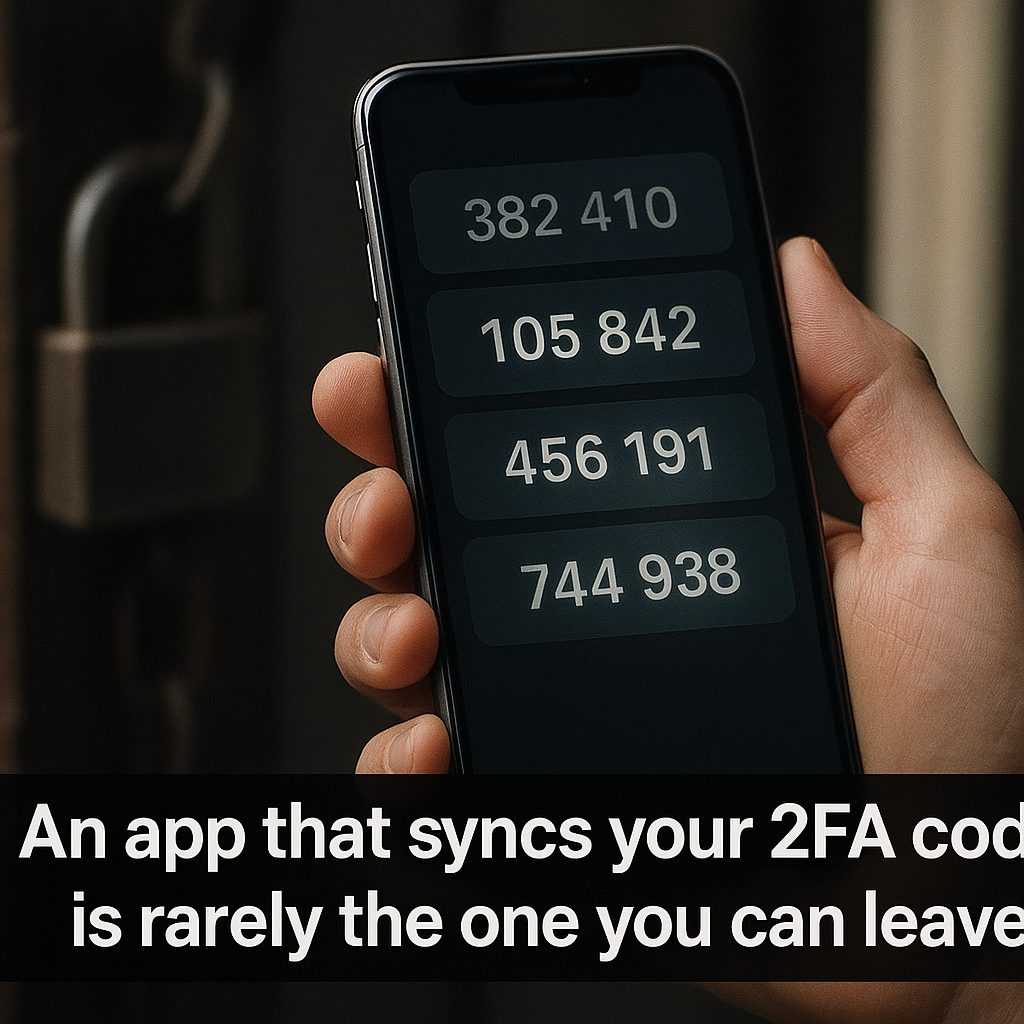
Seven 2FA authenticator apps compared on price, platforms, backup, and whether you can export your codes — the real risk is an app that won't let you out.
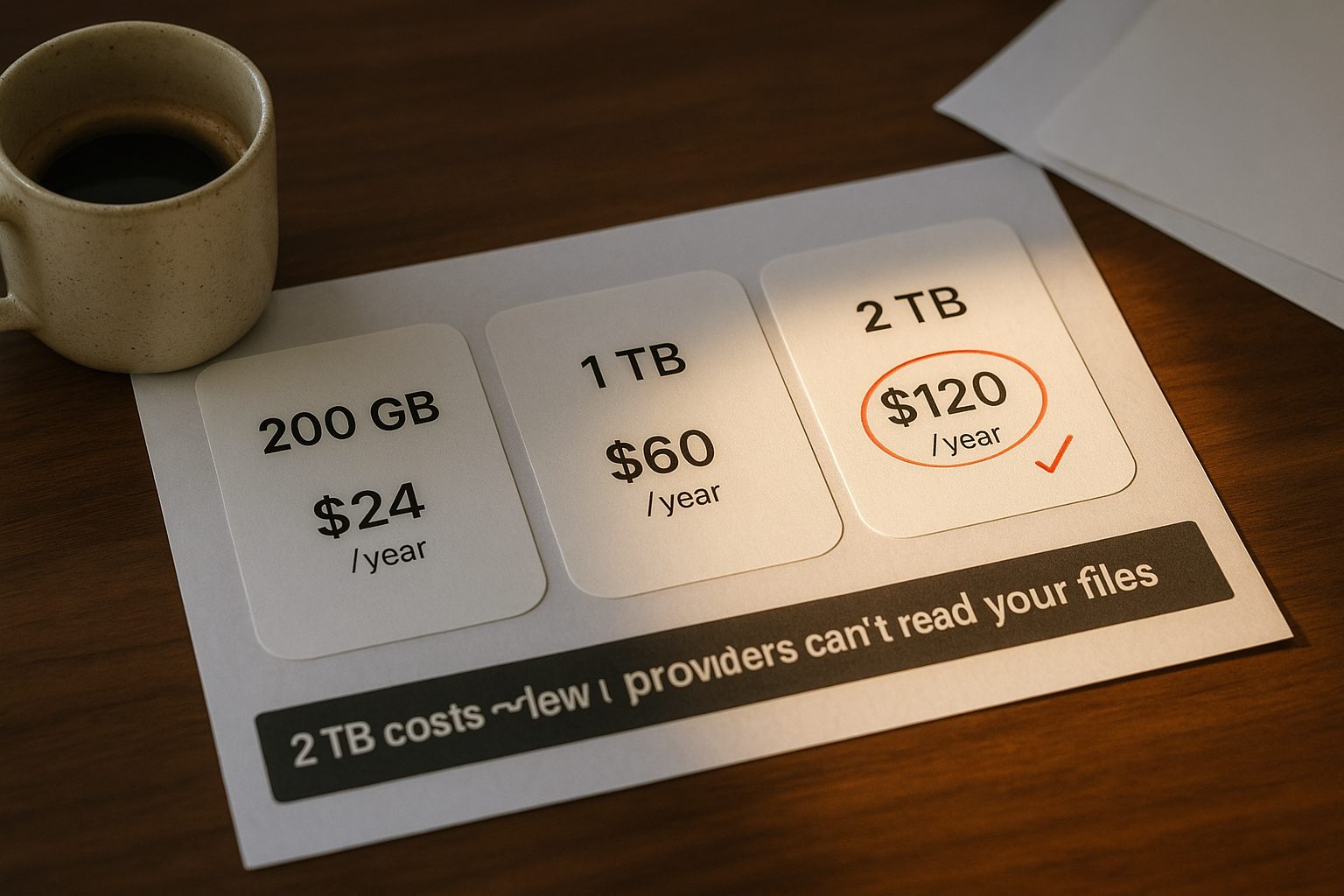
Cloud storage pricing per terabyte: what nine providers charge a year, and which plans encrypt files so the provider cannot read them.
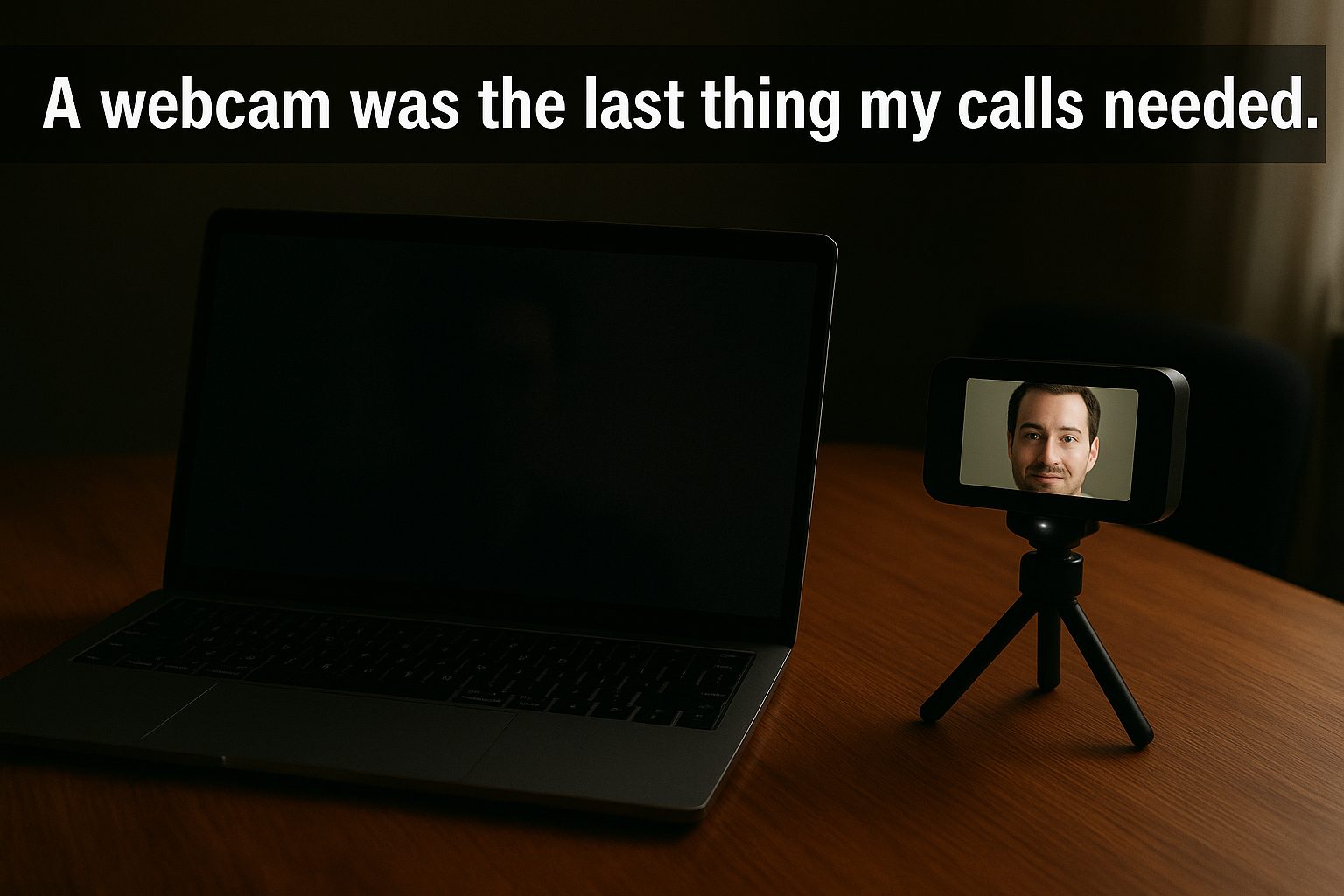
Zoom, Meet and Teams cap what a webcam can send, so 4K rarely reaches anyone. A sourced guide to resolution, sensors, autofocus, mics and lighting.
You click 'I agree' on documents nobody reads. Here is the five-minute scan that finds the three sentences that actually matter before you hand over your data.
Compare AI subscriptions with direct API use using documented Claude, Notion and Otter features, a total-cost example, and an export checklist before paying.
Four popular messaging apps compared on default encryption, group chats, backups and metadata, because 'encrypted' means different things from app to app.
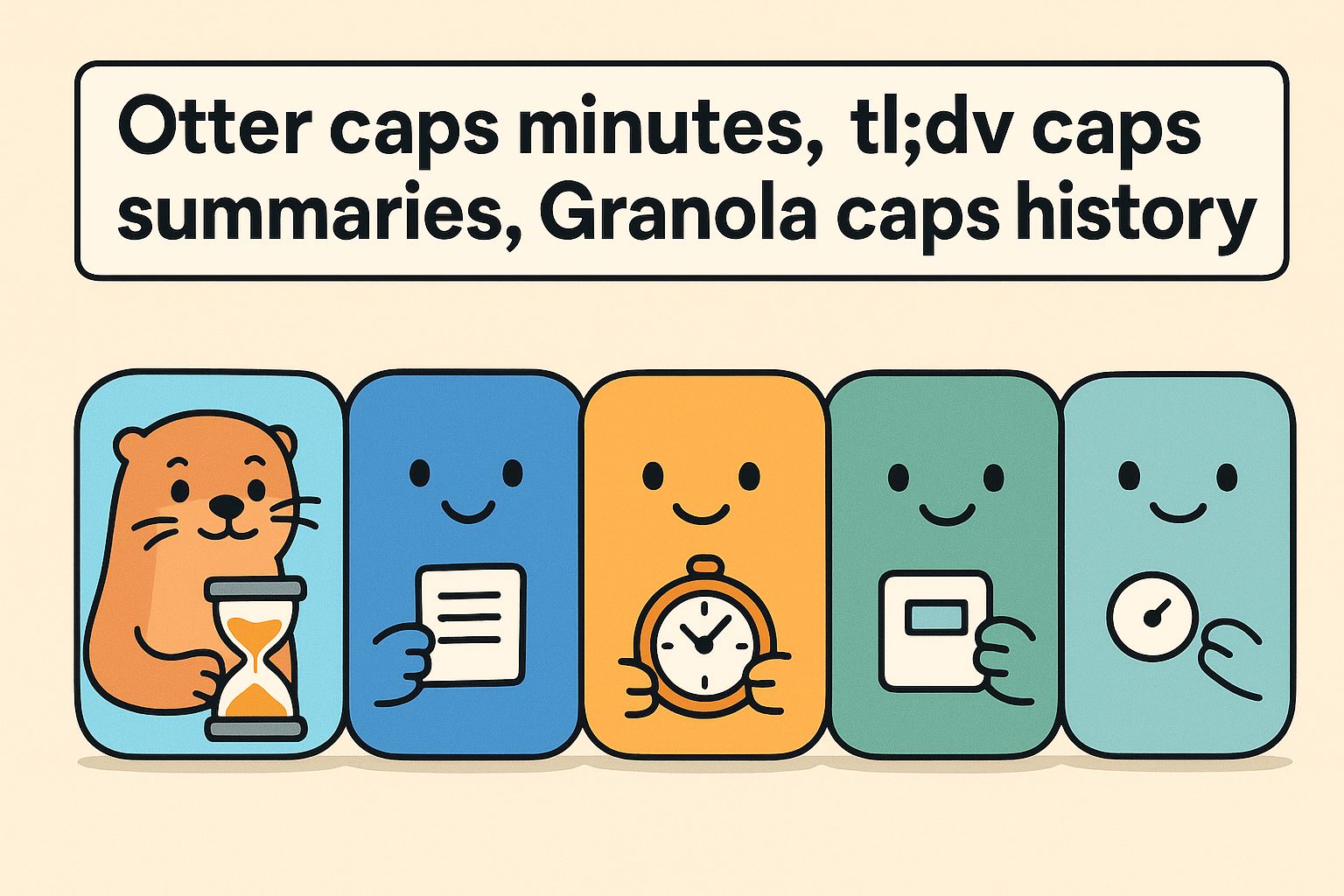
Compare Otter, Fathom, Fireflies, tl;dv and Granola free plans: transcription caps, summary allowances, history access and export limits before choosing a tool.
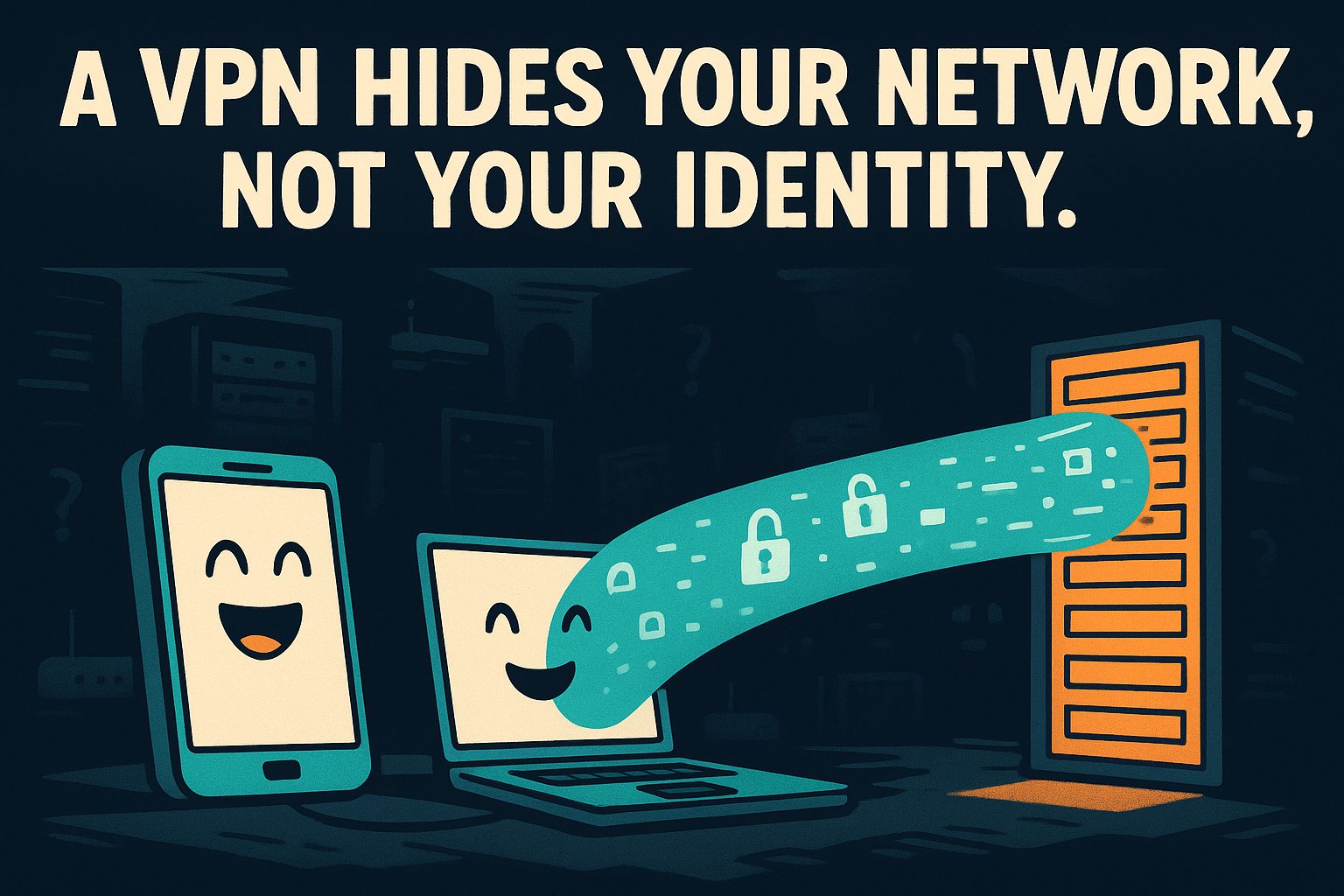
Understand what a VPN hides, what HTTPS already protects, and how to check free-plan claims, kill switches, and privacy policies before paying for a service.
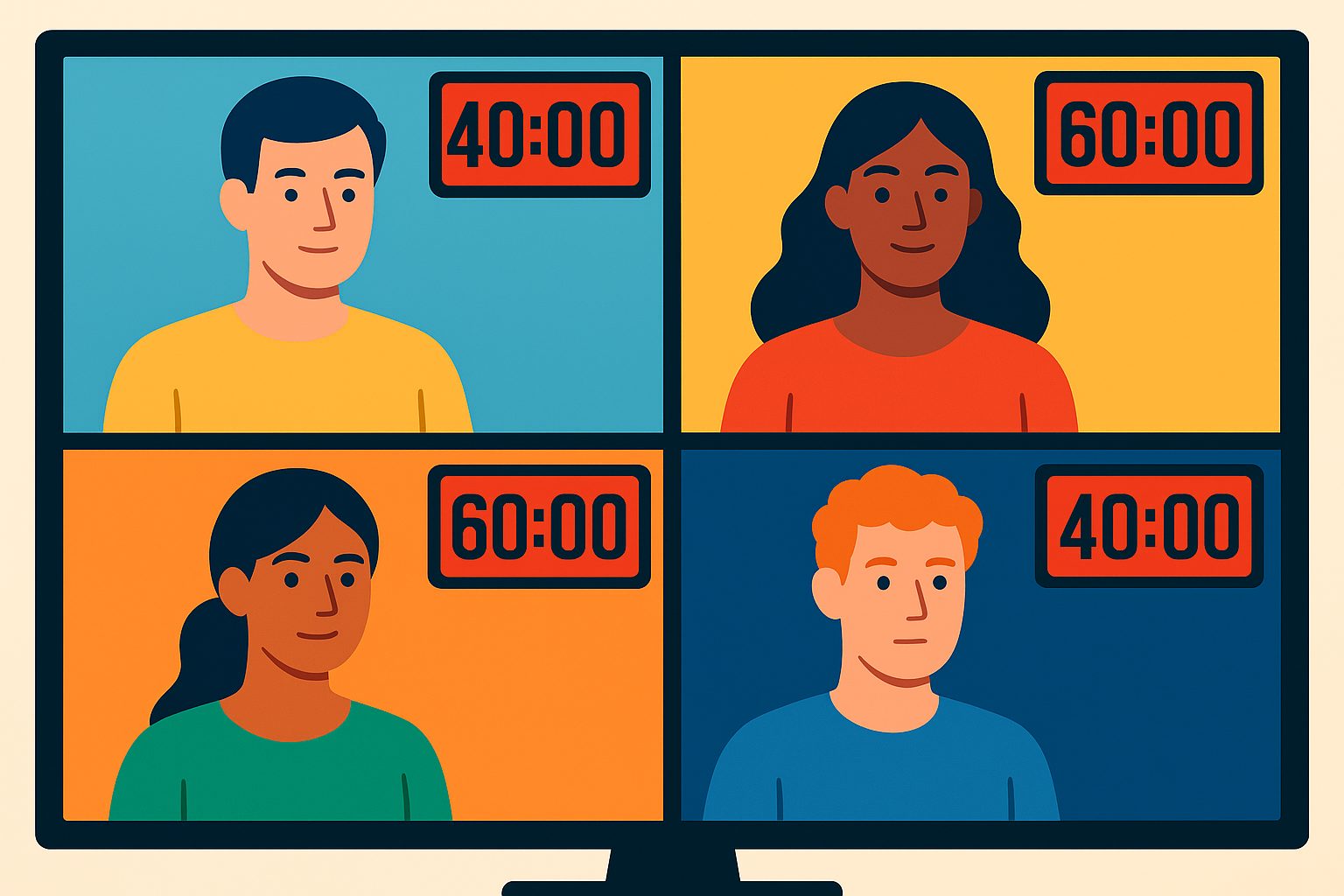
Zoom, Meet, Teams and Webex all cut a free group call at forty or sixty minutes, and none records to the cloud. The differences are smaller than you'd think.
Six project tools, one table: where each free plan ends, what the cheapest paid tier costs, and how you get your data out. Every cell links to its vendor page.
Compared the free plans and yearly cost of Calendly, Cal.com, SavvyCal and TidyCal. One caps you at one event type, one is free forever, one has none.
Mailchimp, Kit, Buttondown, MailerLite and Beehiiv free tiers compared from their pricing pages. Caps run from 100 to 10,000 subscribers, plus hidden limits.
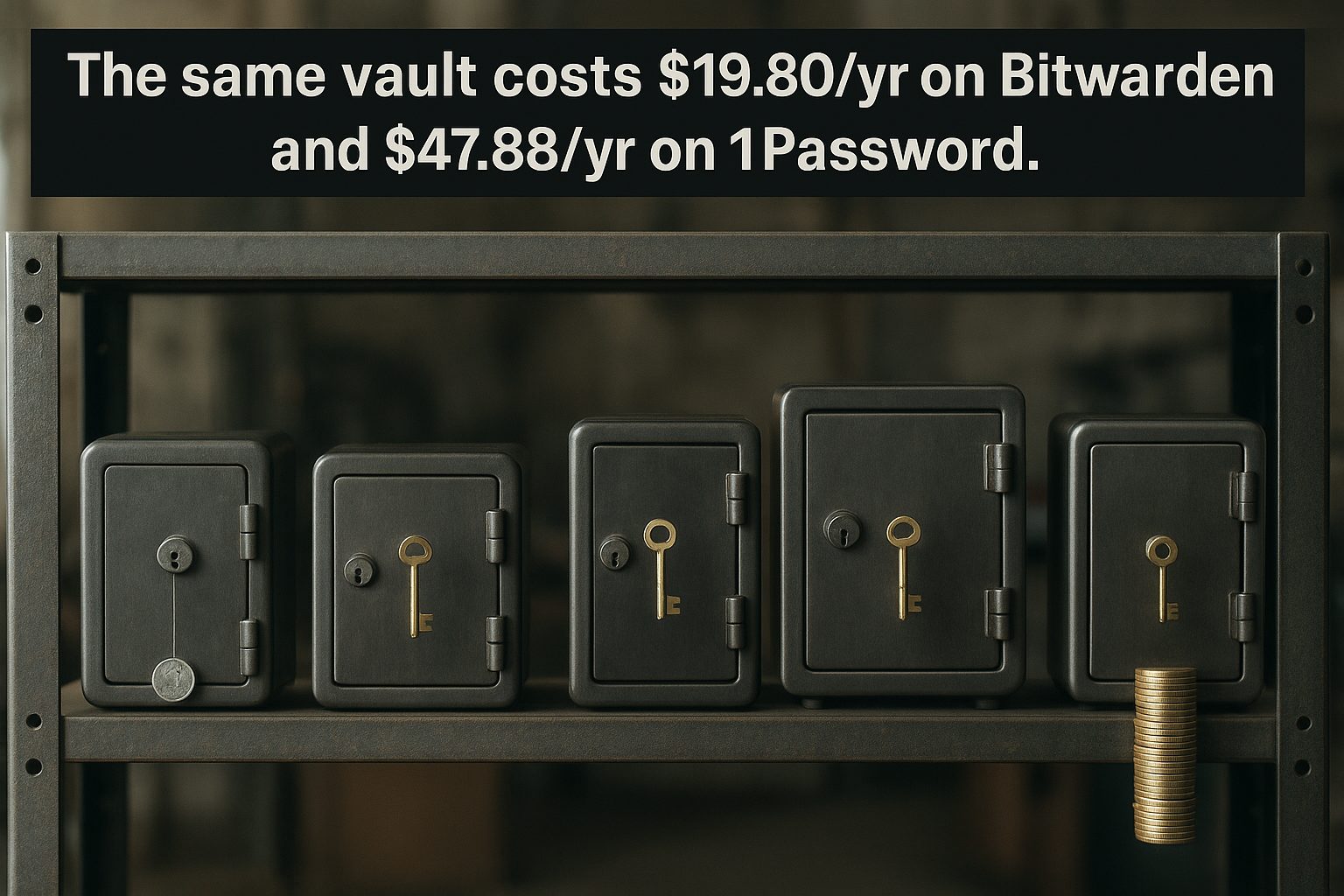
Compare Bitwarden, 1Password, Dashlane and NordPass free-plan limits, annual prices and promotional terms, with a worksheet to check costs before subscribing.
Seven cloud services, compared: what the free tier really gives you, what the first paid tier costs a year, and why a 5 GB default is an upsell.
Compare trackball controls, connection options, and desk fit, then use a practical trial checklist to decide whether switching from a mouse makes sense.
A sourced checklist for putting Otter, Fathom, tl;dv or Granola in front of a team: history limits, export formats, per-seat prices and recording consent.
Twenty percent off for paying yearly sounds like free money. Priced as an interest-free loan with a cancellation penalty, it is a much narrower deal.
Compare Cloudflare Pages and Netlify for a static marketing site using documented limits, 500 builds versus 300 credits, redirect rules, caching and analytics.
Before cancelling team software, check exports, shared access and fallback workflows. Use a dependency worksheet to separate real savings from hidden work.
A sourced method for deciding whether to keep a tool another product now duplicates, using Figma, Filestage and Ziflow documentation and a blank worksheet.
Compare Sony WH-1000XM5 and Sennheiser Momentum 4 battery claims, then use a practical checklist to test fit, device switching and calls before keeping a pair.
A documentation-based guide to 1Password for a very small team: Starter Pack vs Business cost, who can recover a locked account, and what to check on the trial.
Find unlisted team software by matching bills, signups and account permissions. A sourced Google and GitHub checklist with a reusable inventory worksheet.
Fastmail vs Proton Mail for a small business address: how search, encryption, custom domains, export and per-user pricing actually differ, with sources.
Before moving a wiki, docs, task tracker and client portal onto Notion, price each job and test exports, speed and publishing limits. Worksheet included.
Plan a team tool migration with export checks, an integration inventory, link mapping, a cutover checklist, and a worked example of switching costs.
OSHA and CCOHS placement guidance, stock-stand ranges from Dell spec sheets, and two arm spec sheets compared, with a compatibility checklist before you buy.
A five-step SaaS pricing audit that rebuilds the real annual cost before a trial, using published Slack, Asana, monday.com, Zapier, Atlassian and Adobe terms.
Check SaaS exports for missing files, relationships and access limits. Notion and Slack documentation anchors a practical worksheet for testing your exit.
Compare Figma and Penpot using official pricing and export documentation, then test components, client handoff, and migration costs with a practical worksheet.
A quarterly software audit for small teams: build the sheet from payment records, check seat activity in Slack, Workspace and Microsoft 365, decide every line.
Calculate software seat costs with documented Slack, Notion and monday.com billing rules, a headcount worksheet, and examples of annual renewal commitments.
Four controlled studies on AI and work speed, side by side: where the gains were real, where people got slower, and a ten-second log to test your own use.
Keyboard reviews measure what you feel in the first fortnight. The properties that decide whether you keep one show up later. How to buy for those.
Evaluate Linear with sourced details on optional cycles, search, annual pricing and exports, plus practical checks for your team before switching tools.