How to Read a Privacy Policy in Five Minutes
You click 'I agree' on documents nobody reads. Here is the five-minute scan that finds the three sentences that actually matter before you hand over your data.
Nobody reads privacy policies, and the companies that write them know it. The document is not there to be read; it is there to be consented to, and the moment you click through it, it has done its only job. But buried inside the wall of legal language are about three sentences that determine everything that can actually go wrong for you, and those three sentences can be found in five minutes with the right scan. This is that scan.
The first thing to understand is why the document looks the way it does. A privacy policy is written by lawyers for two audiences at once: a regulator who might audit it, and a user who is expected not to read it. The result is prose that is technically precise and practically impenetrable — every category of data spelled out, every processing purpose enumerated, every legal basis named. Length is not a sign that a company is hiding something, and a short policy is not a sign that it is honest. Length is mostly a sign of how many lawyers were involved.
What you are actually looking for is three sentences: what they collect, who they give it to, and whether you can delete it. Everything else in a typical policy — the definitions, the “legitimate interest” paragraphs, the list of countries where data is processed — is downstream of those three facts. If you find nothing else, find those.
Start with collection. The sentence you want usually sits under a heading like “Information we collect” or “Data we collect about you.” Read it for the gaps, not the items. Most policies will honestly list what they collect. The question is what they collect that has nothing to do with the service. A note-taking app collecting your contacts, a flashlight app collecting your location — those are the tells. If the collection list includes categories that seem irrelevant to what the app does, that is the first red flag, and you can often stop reading there.

Then look for sharing. This is the sentence that matters more than any other, and it is deliberately the hardest to find because it uses words designed to feel harmless: “service providers,” “affiliates,” “partners,” “selected third parties.” The real question is whether your data is sold or shared for advertising. In the United States, California’s privacy law forces companies to state this explicitly if it happens, usually in a sentence containing the words “sell” or “share” and “personal information.” When a company does sell data for ads, it cannot hide that fact forever, but it can bury it three paragraphs deep under a heading that sounds reassuring.
There is a specific distinction worth knowing before you scan, because it is the difference between a real red flag and a non-event. “Selling” your data means a third party pays for it and uses it for its own purposes, usually targeted advertising. “Sharing” can mean the same thing in the California legal sense, but it can also mean the mundane, necessary passing of data to a payment processor or a hosting provider. A policy that says it “shares data with service providers who perform functions on our behalf” is describing something close to inevitable. A policy that says it “sells personal information to third parties” is describing a business model where you are the product.

The third sentence is about deletion and export, and it is the one people most often skip because it feels abstract until the day they need it. You want to know two things: whether you can download the data they hold on you, and what actually happens when you delete your account. A policy that says data is “retained for as long as necessary for legitimate business purposes” is telling you, in polite terms, that your data may outlive your account by years. A policy that names a concrete window — deleted within 30 days, anonymized after 12 months — is being honest about the mechanics. The absence of a deletion clause is itself information.
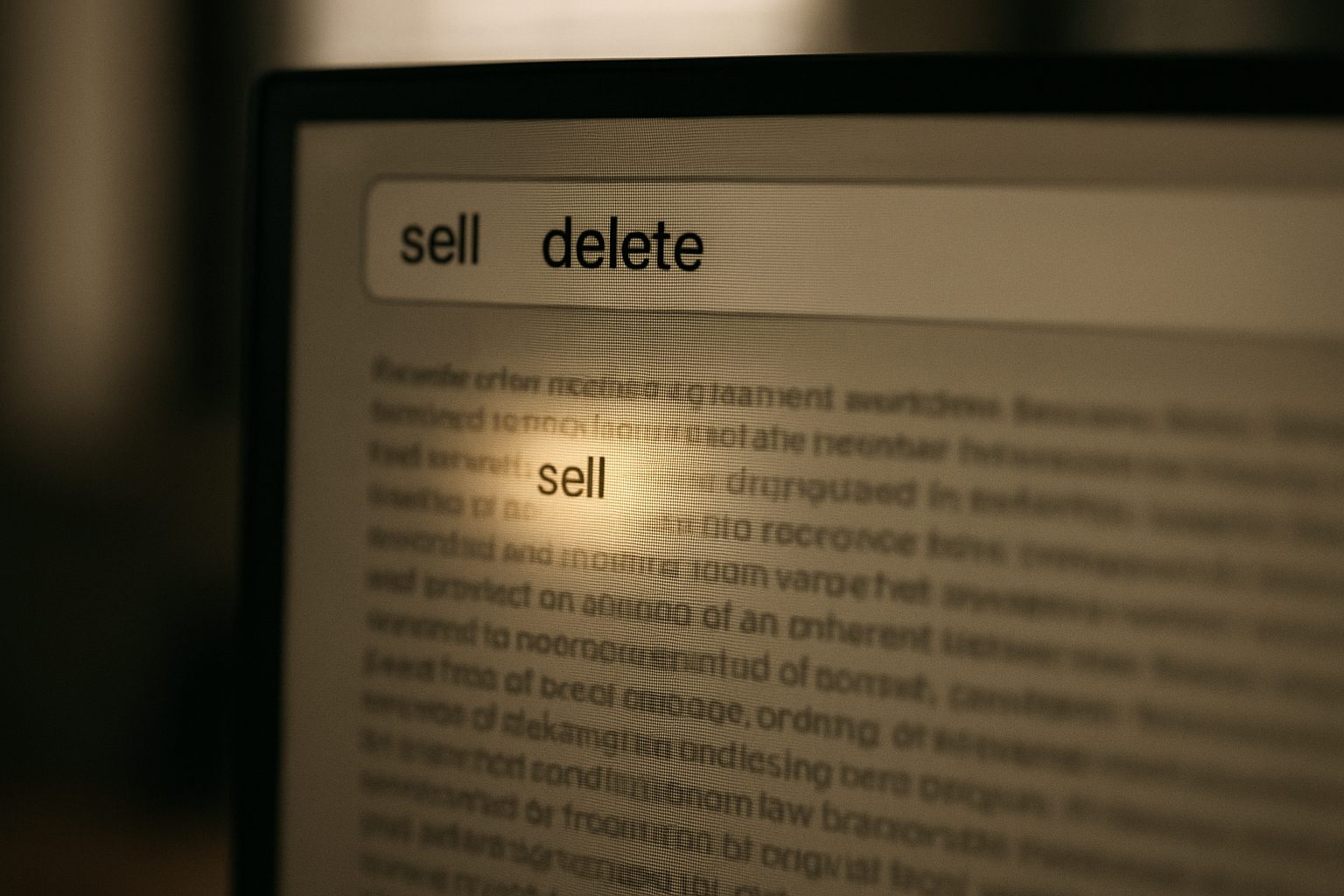
The fastest practical method is a keyword search, not a read. Open the policy and search for the words “sell,” “share,” “third party,” “retain,” “delete,” and “advertising.” Each hit will land you within a sentence of the answer you need. This is not a shortcut that skips understanding; it is the understanding, because a privacy policy is structured so that the dangerous facts are concentrated in a handful of phrases that are easy to search and hard to read in context. You are using the document’s own density against it.
It is worth distinguishing the privacy policy from its sibling document, the terms of service, because people conflate them and look in the wrong place. The terms of service govern your behavior — what you may post, whether you may resell, who owns the content. The privacy policy governs their behavior — what they do with your data. A question like “can this company read my messages” is a privacy question. A question like “can I get banned for this” is a terms question. Almost everything that can quietly hurt you is in the privacy policy; almost everything that can loudly hurt you is in the terms.
There is also a difference between what a policy promises and what it enables, and this is where the encryption conversation gets concrete. A messaging app can promise end-to-end encryption and still collect an enormous amount of metadata — who you talk to, when, how often. The policy is where you find out which is true, and it matters because which messaging apps encrypt by default is a question the marketing page will always answer favorably and the policy will answer precisely.
One habit that collapses the whole exercise: do not read a policy for the first time when something has already gone wrong. The moment to look is before you hand over a real email address or a payment method. Reading a policy after a breach is like checking the weather after you are soaked. The five-minute scan is cheap enough to do up front, and it is the difference between choosing a service and being chosen by one.
It is also worth being honest about what the scan cannot do. A clean privacy policy is not a guarantee of good behavior; it is a written statement of intent that a company can violate or quietly amend. That is why the “we may update this policy from time to time” clause is worth one extra second: it tells you that the document you are reading can change without a new click from you, which is a different kind of consent than the one you gave. Knowing a company is bad at privacy is easy. Knowing it is capable of becoming bad is the harder, more useful thing.
If you remember nothing else, remember that you are not trying to read the policy — you are trying to read the company. The three sentences about collection, sharing, and deletion are a fingerprint of what the business actually is. A company that collects only what it needs, shares only with the people who make the service run, and tells you plainly how to delete your data is telling you something true about its incentives. A company that collects your contacts for a note app and sells data to “partners” is telling you something true too. Neither statement is hidden. You just have to know which three sentences to read.
This is the same basic posture as the other unglamorous self-protection habits: it is less exciting than a VPN, but what a VPN actually does and does not do is mostly about hiding your traffic from your network, not from the service you are logged into. The privacy policy is the only document that tells you what the service itself will do with you, and no amount of infrastructure covers for never having read it.
Related reading
What a VPN Protects: HTTPS, Tracking, and Free Plans
Understand what a VPN hides, what HTTPS already protects, and how to check free-plan claims, kill switches, and privacy policies before paying for a service.
Encrypted Note Apps Compared: Who Can Read Your Notes, and What Each Plan Costs
Which note apps are end-to-end encrypted, what each paid plan costs, and how you get your notes back out — five apps checked against their own pages.
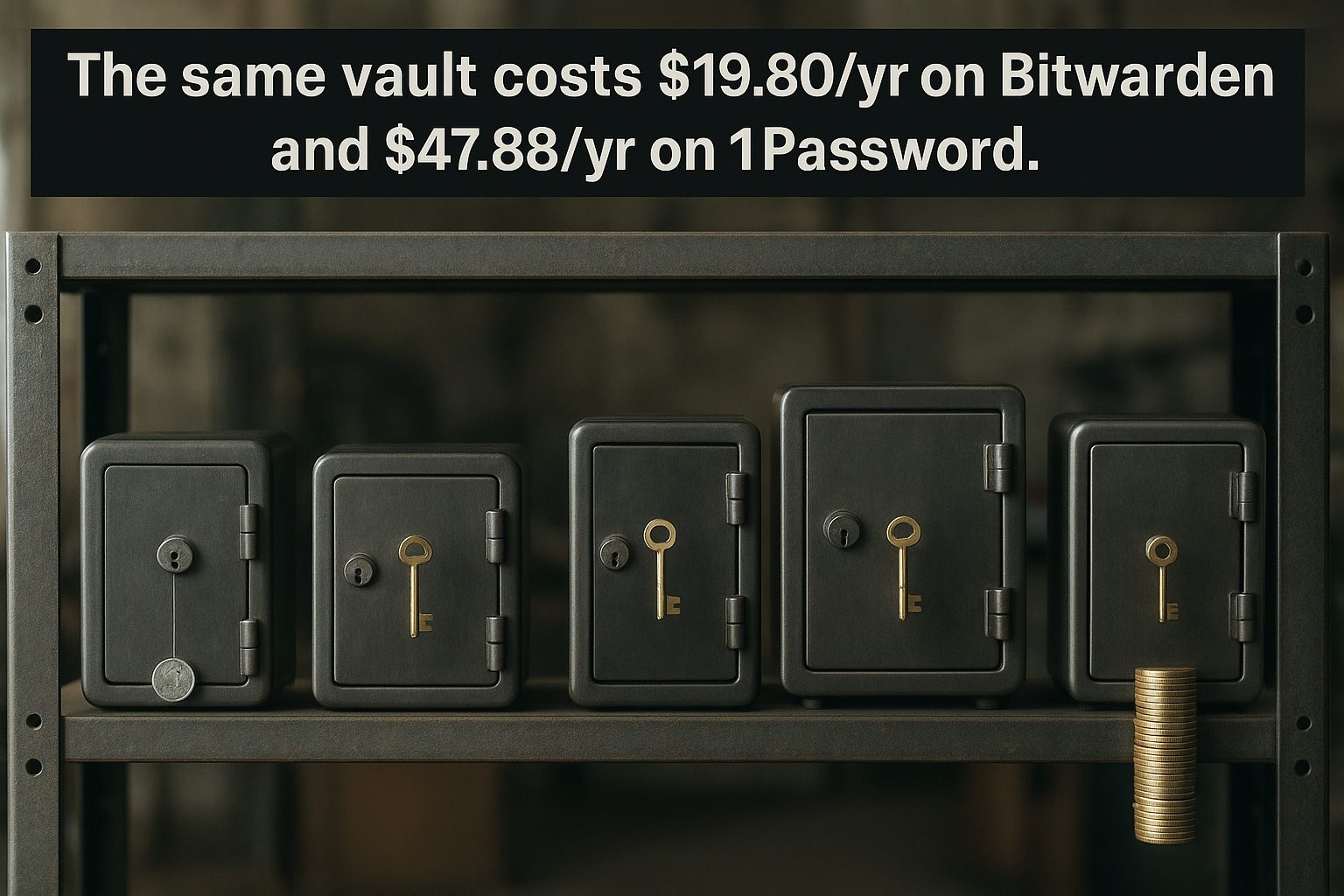
Password Managers Compared — Free Limits, Annual Price, and Who Can Read Your Vault
Seven password managers compared on free limits, annual price, zero-knowledge encryption, and export, checked against each vendor's own pages.
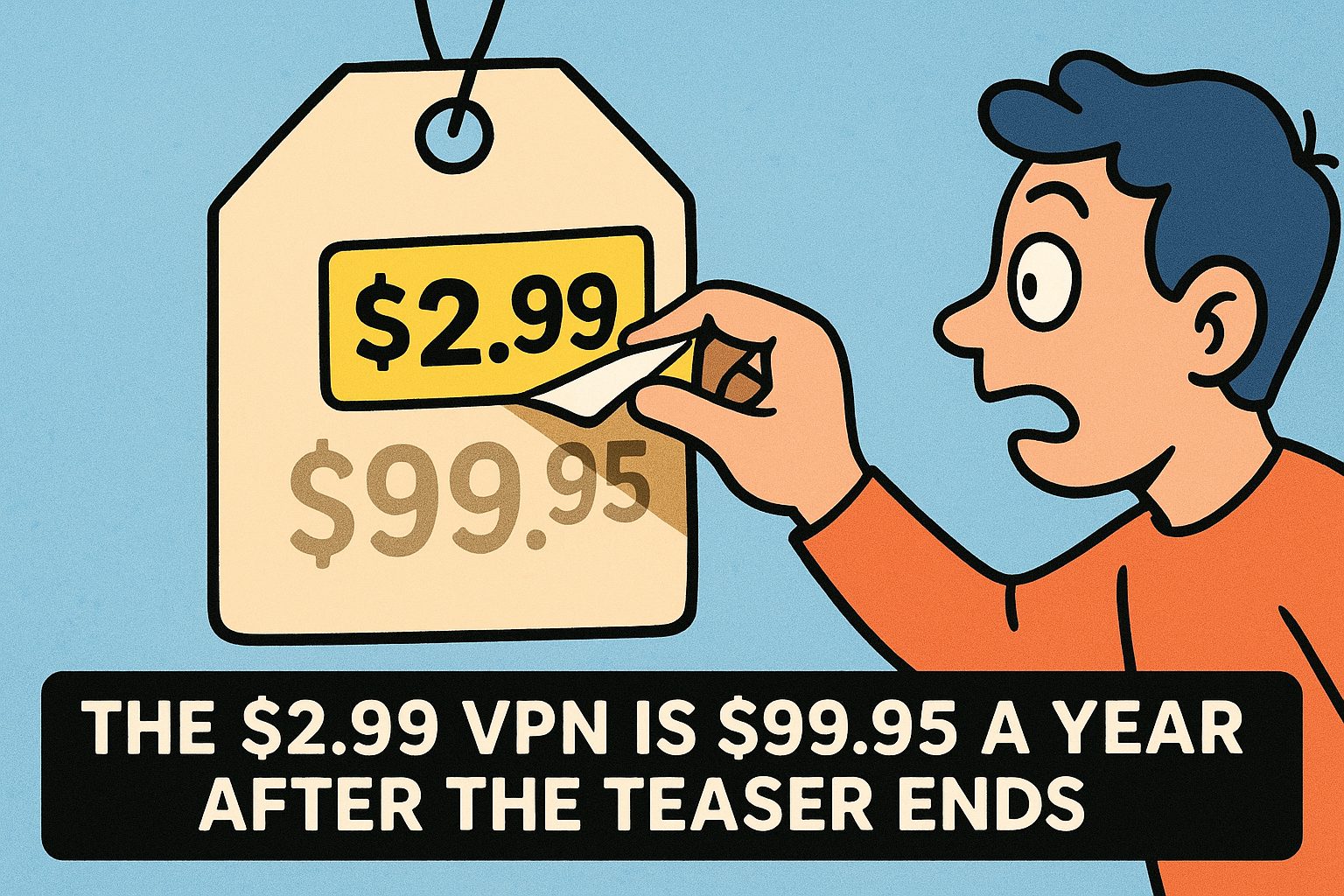
What a VPN Costs per Device, and Which Providers Publish Proof of No Logs
Seven VPN providers compared on real prices, device limits, logging policies, jurisdiction, and refund windows, checked against each vendor's own pages.