Which Subscriptions Let You Quit Online — and Which Still Make You Call
Gyms and cable still force a phone call, a letter, or an in-person visit to cancel; Audible and Amazon take two clicks. Eight subscriptions compared on leaving.
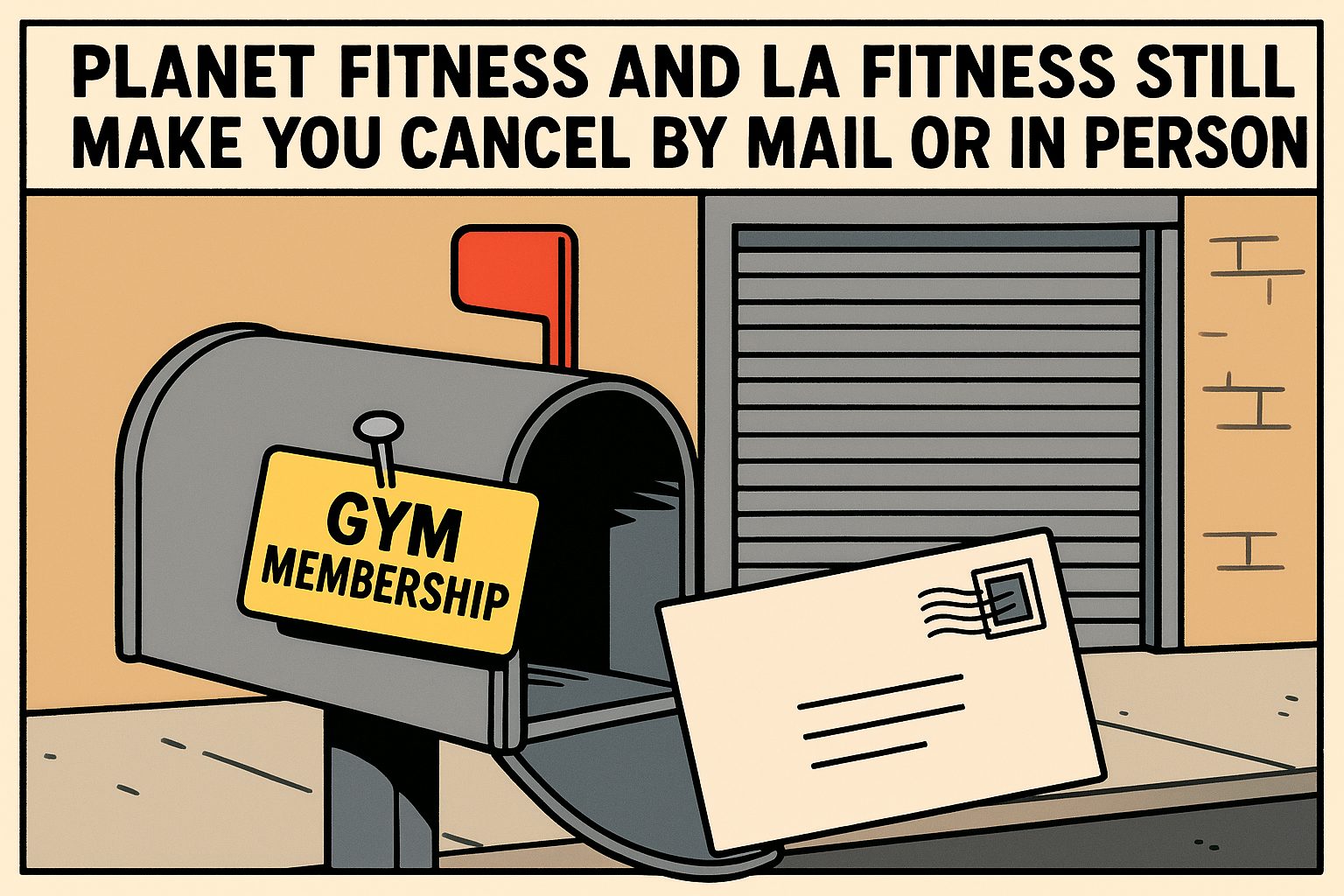
The way a subscription signs you up and the way it lets you leave are almost never the same thing. Amazon Prime takes your card in about twenty seconds, and you can end the whole membership from a button buried two menus deep in the account settings. Planet Fitness will happily sell you a membership online in minutes — then, to stop the $10-a-month charge, you have to appear at the front desk of your “home club” or mail a certified letter. That gap isn’t an accident of engineering. It’s the single best tell for how much of your money a company expects to keep collecting after you’ve stopped wanting the product, and it’s worth seeing as a table before you hand over another card number.
Every cell below came from the company’s own cancellation page or terms, on the date in the verification line. The column that matters is the last one: not whether you can cancel, because you always can eventually, but how much friction sits between deciding to leave and actually leaving — and what that friction quietly costs you while you’re still paying.
| Service | How you cancel | Fully online? | The friction, and what it costs you |
|---|---|---|---|
| Amazon Prime | Account → “End Membership” | Yes | Nearly none; full refund of the current period if you never used the benefits |
| Audible | Account details → “Cancel membership” | Yes | Nearly none; but any unused credits can be lost on the way out (pausing keeps them) |
| Adobe Creative Cloud (month-to-month) | Account → “Cancel your plan” | Yes | The month-to-month plan quits cleanly, but the “annual, paid monthly” plan charges an early-termination fee of 50% of the remaining balance after the 14‑day window |
| HelloFresh | Account Settings → “Cancel Plan” | Yes | Online, but you click through three to five retention screens offering discounts and free boxes, and must finish 5 days before the next delivery |
| SiriusXM | Online Account Center → Subscriptions tab, or chat, or phone | Partly | Historically phone-and-chat only; the online account-center path is newer, and you must cancel before the renewal to stop the charge |
| Planet Fitness | In person at your home club, or by certified mail | Mostly no | No phone cancellation; notice must reach the club about 7 days before your billing date or another month charges |
| LA Fitness | In person, or by mail to a P.O. box | No | Phone and email cancellations are refused; the FTC sued the chain in August 2025 over an “extremely difficult” process |
| Xfinity (Comcast) | Phone (1‑800‑934‑6489), a scheduled callback, or a store visit | No | No online self-service at all; the call routes you to a retention department |
Checked September 23, 2026. Cancellation methods and policies can change.
Sources: Amazon Prime cancellation, Amazon Prime Terms, Audible cancel membership, Adobe cancel a subscription, Adobe cancellation terms (US), HelloFresh how to cancel, SiriusXM manage or cancel service, SiriusXM Customer Agreement, Planet Fitness contact us, LA Fitness membership questions, USA Today on the FTC’s LA Fitness suit, Xfinity how to cancel, FTC Negative Option Rule.
Two kinds of exit, and which one you have
Read the table top to bottom and a line appears. The pure-digital services — Amazon, Audible, Adobe’s month-to-month plan — let you leave online in a few clicks, because for them canceling is just flipping a flag in a database attached to an account that already lives on a screen. The physical-legacy businesses — the two gym chains and the cable company — make leaving a phone call, a letter, or a walk through a door, because their billing relationship was built around a building or a truck in your driveway, and because a human in the loop gets one more shot at talking you out of it.
That human-in-the-loop step is the whole business model. Retention is cheaper than acquisition, so a company that can force a conversation before you leave gets to pitch you a discount, a pause, a downgrade, a free month — and every one of those keeps a slice of revenue that a two-click cancel would have killed on the spot. It’s no coincidence that the hardest exits belong to the categories with the longest contracts and the most physical overhead. The harder a gym or a cable provider is to swap, the more it pays to make the door sticky on the way out.
Why the “call us” rule keeps surviving
There’s a reason the friction is legal, and it changed twice in the last eighteen months. In October 2024 the FTC finalized a “click-to-cancel” rule telling sellers to make canceling as easy as signing up — you signed up online, you cancel online. Compliance deadline: May 2025. Then in July 2025 a federal appeals court vacated the rule, and in early 2026 the FTC revised it accordingly. The practical result, as of the date on this page, is that the old “call or mail us” flows still stand at gyms and cable companies, because the rule that would have forced them to change isn’t in effect right now.
This matters more than it sounds, because the gap between the law and what people assume is exactly where the money leaks out. A subscriber who assumes the FTC already fixed this is the subscriber who puts off canceling a gym membership, eats one more month’s charge, and only then discovers the eight-step process. The gap between what you think you can do and what you can actually do with a subscription keeps showing up here — it’s the same mismatch that makes a subscription bought through the App Store behave like a completely different product from the one sold on the vendor’s website.
The friction has a price, even when it is invisible
It’s tempting to write cancellation friction off as a one-time nuisance — a twenty-minute call, a trip to the post office, a form at a desk. That understates it. The real cost is the month you keep paying while you work up the energy to deal with it. A $10 gym that wants certified mail isn’t just making leaving slow; it’s making leaving feel like a project. And a project with a nonzero chance of being postponed to “next week” has already paid for itself. Scale the same thinking to a $60 cable-and-internet bill and a single procrastinated phone call is worth a round-trip through the retention department alone. The small charges hide the same way the friction does — trivial one at a time, compounding while they sit off your radar — which is why the smallest subscriptions are the hardest to catch.
The cleanest fix is to treat the exit path as part of the purchase decision, before the card is even charged. When you sign up for anything recurring, note how you’ll leave and what leaving requires — online or not, notice period, early-termination fee. It’s the same paper-trail instinct that kicks in when you realize a subscription has two separate cancellation points depending on who actually bills you. If the answers come back “by mail” and “50% of the remaining balance,” that’s information you want before the first renewal, not after you’ve already decided to go.
Getting through the door is only half of leaving
Once you reach the actual cancellation, a second, quieter set of terms decides whether leaving costs anything else. Some services plainly stop future charges; others sneak in a mid-cycle rule, a termination fee, or a deadline. Adobe’s annual-plan fee is the starkest example in the table, but it’s not the only fine print that bites. The spread is wide enough that whether you get a refund after you cancel deserves its own comparison — because “no refund on unused days” and “full refund within fourteen days” are two completely different relationships with the same recurring charge.
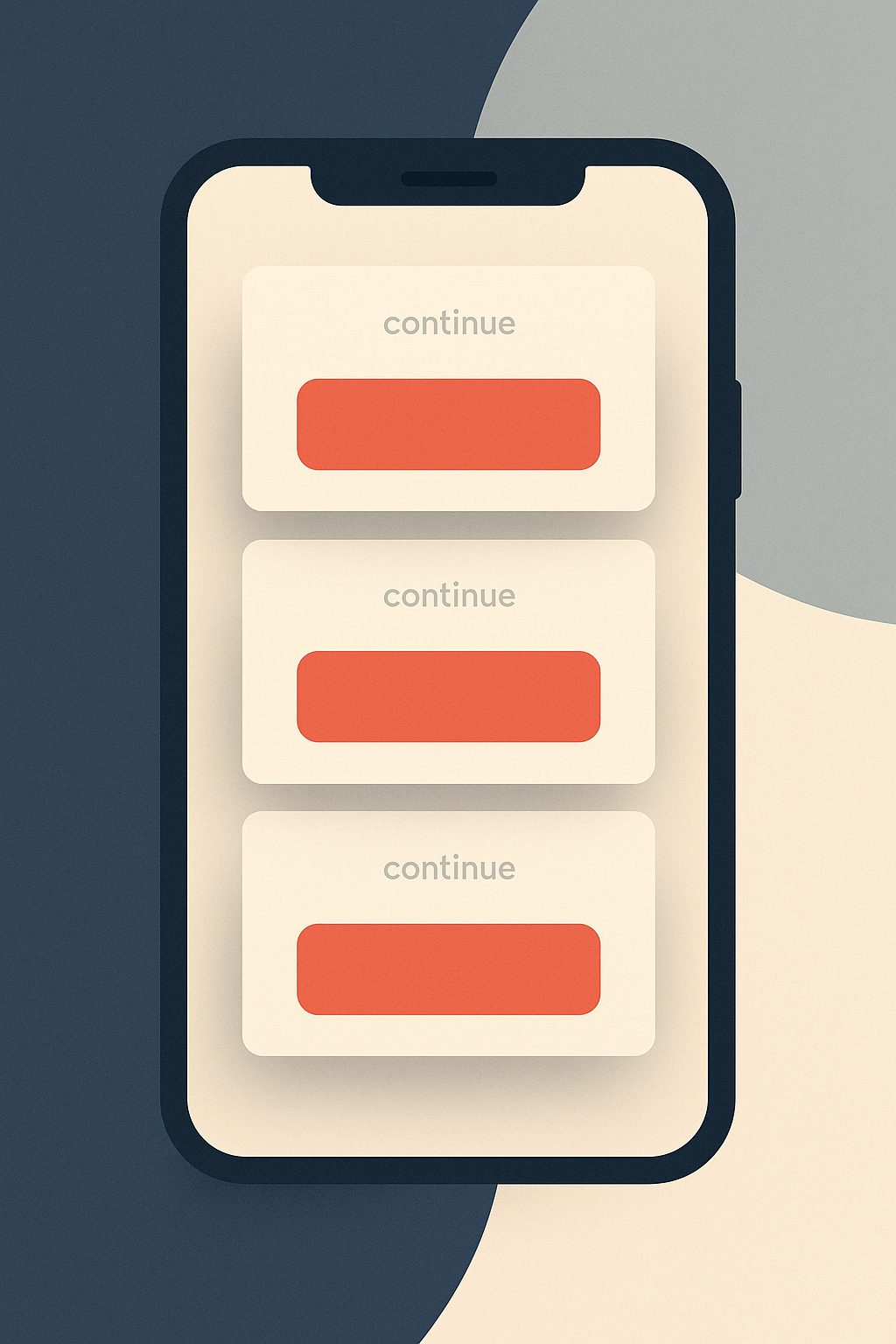
There’s also a retention trick worth naming on its own: the screens that greet you when you try to leave online. HelloFresh’s flow is the canonical version — three to five screens, each offering a discount, a free box, or a pause, each needing a click past before the final “cancel” lands. None of it’s illegal, and a pause can genuinely be the right call if you mean to come back. But the framing is deliberate: the “continue cancelling” link is styled to be the least inviting thing on the screen, while the “here’s 20% off to stay” button is the one your eye lands on first.
The takeaway is a short list you write once
The whole pattern reduces to four questions you can answer before you subscribe to anything: Is there a self-service cancel button, or do I need a phone call, a letter, or a visit? What’s the notice period, and does it line up with my billing date? Is there an early-termination fee? And does canceling online route me through a gauntlet of retention screens? Answer those four and the recurring charge stops being a black box. It becomes a known cost you’ve already priced — which is about as much control as anyone gets in a system built to make leaving the hardest part of the deal.
Related reading
What Actually Happens to Your Data When You Cancel a Subscription
What seven subscriptions keep after you stop paying, from their own help pages. Netflix holds history 10 months; Adobe and Dropbox start a 30-day clock.

Pause or Cancel a Subscription? Netflix and YouTube TV Rules Compared
Compare Netflix and YouTube TV pause limits, automatic restart billing, and access rules, then use a checklist to decide whether to pause or cancel your plan.
Most Subscriptions Have No Turn Off Auto-Renew Button
How to turn off auto-renew on nine subscriptions: most make you cancel, Microsoft has a real off switch, and Adobe charges 50% to leave.
Streaming Prices: Compare Ads, 4K and the Plan You Need
Compare US streaming prices, ad-free upgrades, 4K and screen limits with official sources, verification gaps, and a worksheet for your annual viewing budget.