The Price Hike Buried in Your Renewal Email
Subscription price increases arrive weeks before the charge. What Apple, Google Play and vendors must tell you, when you must agree, and where to catch it.
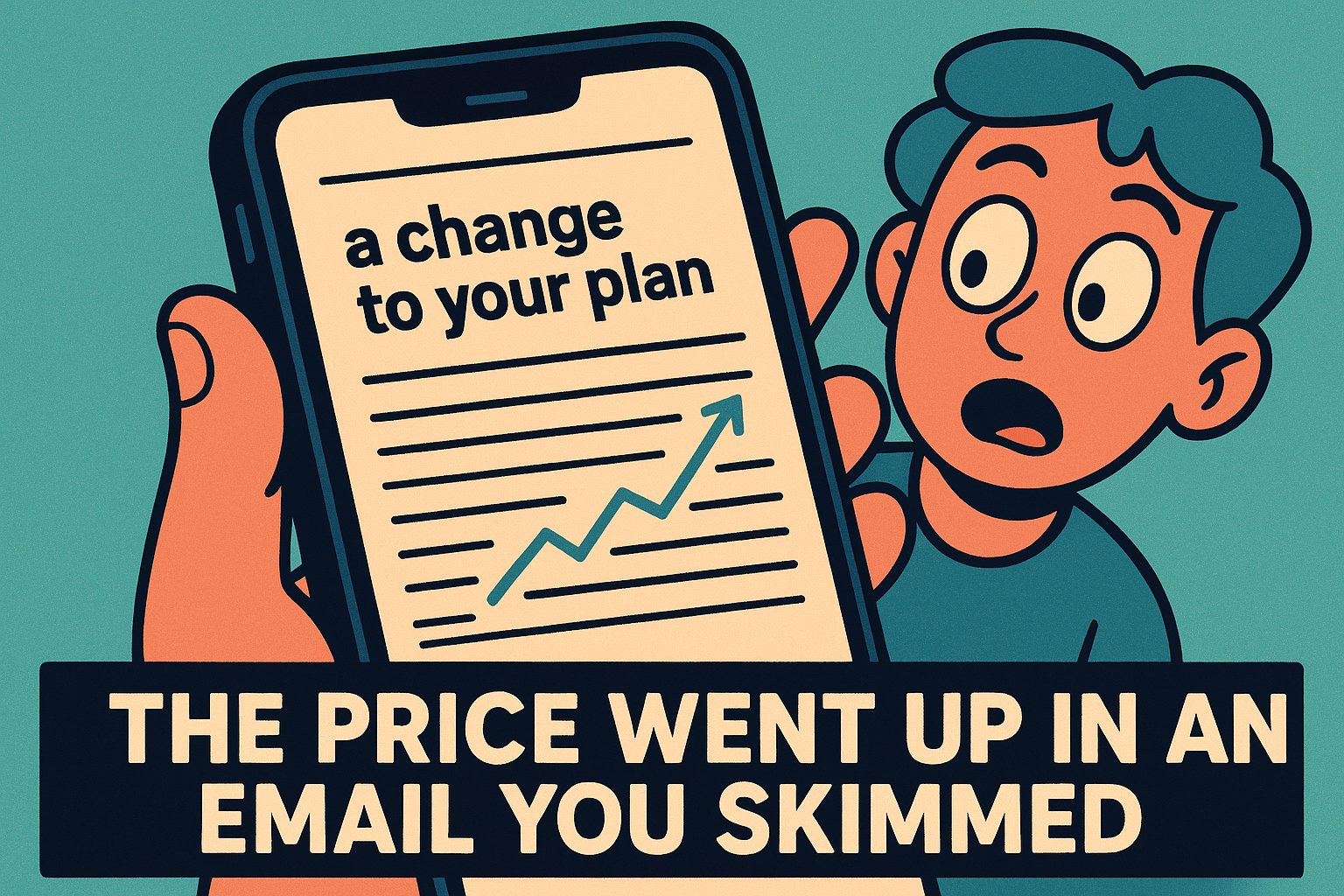
A subscription price increase is the easiest charge to miss, and not because anyone hides it. The company announces it, usually in an email with a subject line like “A change to your plan.” The problem is that the announcement and the charge are separated by weeks, sometimes months, and by the time the higher amount reaches the card, the email that warned about it is buried under everything that arrived since. Say a $10 plan goes to $12 with 30 days’ notice. The notice lands on the 1st, the charge lands on the 31st, and the only trace of the decision point is one unread message from a month ago.
The mechanism
A renewal notice can describe either an increase that takes effect unless you cancel, or one that requires your agreement before renewal. Those are different decisions. Do not infer which applies from the fact that an email arrived: read the consent requirement, effective date and billing provider together.
What makes this different from a normal renewal is that the change is a delta on something you already agreed to. A new subscription asks for permission once, at sign-up, and that decision is felt. A price increase rides on the old decision, and it is not felt at all unless the email gets read. The psychology is the same one that makes the annual plan you regret renew silently: the original “yes” keeps echoing without a fresh one.
What the rules actually require
The rules depend on the billing provider shown on your receipt, not simply whether you signed up inside an app. Apple and Google Play publish rules for subscriptions billed through their stores. A purchase using a vendor’s own checkout follows that provider’s terms and applicable local rules. This table compares the store policies; it does not establish one universal rule for direct billing.
| Question | Apple (App Store) | Google Play | Bought direct from the vendor |
|---|---|---|---|
| How you are told | Email, push and in-app notices | Advance notice; eligible opt-out increases also require a prominent in-app notice with the prices, effective date and cancellation information | Check the provider’s notice and account page |
| How much notice | For consent requests, developer guidance lists first notices 7 days before weekly renewal, 27 days for monthly, and 60 days for longer periods; late scheduling can preserve the old price for an additional cycle | Opt-in: at least 30 days. Opt-out: at least 30 or 60 days, depending on region | Provider- and country-specific; not verified by the store sources |
| Do you have to agree? | Consent is required where regional rules demand it, after a previous increase within 12 months, or when the increase exceeds both 50% and approximately US$5 per non-annual billing period (US$50 for annual plans). Consult local thresholds | Opt-in requires agreement. Eligible opt-out increases do not; these are limited by region, amount and one increase per base plan per region in 365 days | Read the actual consent requirement; do not assume either outcome |
| If you do nothing | A consent-required increase can cause expiry without agreement; an eligible increase without consent can renew at the new price | Opt-in: canceled before the higher charge without agreement. Opt-out: new price charged after the notice period unless canceled | Depends on the applicable notice and terms |
Checked September 30, 2026: Apple consumer explanation, Apple developer pricing rules, and Google Play pricing rules. Regional thresholds and special subscription arrangements can differ; use your account’s notice to identify the applicable case.
Correction, September 30, 2026: The earlier explanation overstated automatic cancellation on Google Play and omitted Apple’s repeat-increase condition. Ignoring a notice can either end the subscription or allow a higher charge. The deciding fact is whether that particular increase requires consent. The two different cancellations explains how to identify the billing provider.
Before dismissing a notice, record five fields: current price, proposed price, first affected renewal date, whether agreement is required, and the cancellation deadline or route. If any field is missing, check the billing account or ask support. Schedule your decision before the deadline, leaving time to verify cancellation. This record is a reader-run method, not a claim that Mirror tested a price increase on a live account.
One place for the date
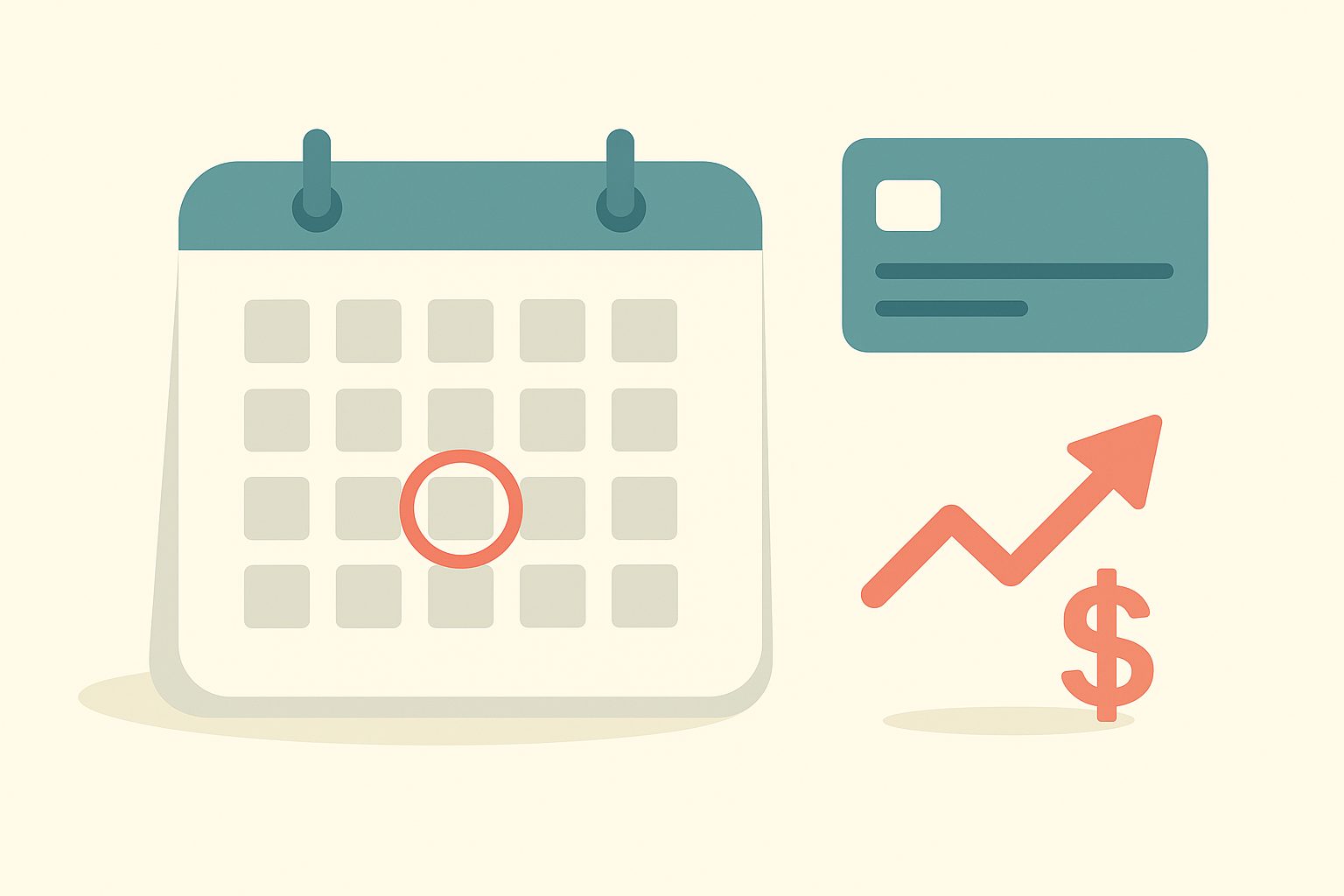
The practical way to catch a vendor-direct increase is to stop treating the renewal email as noise. Most notices carry one sentence that matters: “your plan renews at the new price on X date.” That date is the entire game. If you read only one sentence of a subscription email, read the one with the date and the new number, and put the date somewhere it will surface. A single list of everything that renews and when, the list that finding every subscription you pay for builds, is the natural home; price-change notices slot into it instead of floating free.
The discount inside the hike
There is a specific trap inside the trap: “your price is going up, but here is a deal to soften it.” A service raises its price and, in the same email, offers a discount to stay. The discount is often timed to expire before the new price takes effect, or it locks in another year at an “old” rate that is still higher than the previous one. It feels like a favor when it is really converting a price hike you might have objected to into a commitment you make voluntarily. It is the same machinery as the discount they offer when you cancel, aimed at the renewal end of the funnel. The test is the same too: write down the number you would pay for the service before opening the offer, then check whether the offer meets it for twelve months or for three.
What to do with the notice
What you do about a price hike is a real decision, and it is not always “cancel.” If a service is worth what it now costs, pay the new price and stop resenting it; the resentment is the expensive part, not the extra dollars. If it is not worth the new price, the increase is doing a favor by forcing the question that should have been asked anyway. The failure is neither of those. It is paying the higher price and not wanting the service, purely because the number changed unnoticed. That is paying more for the same ambivalence, indefinitely.
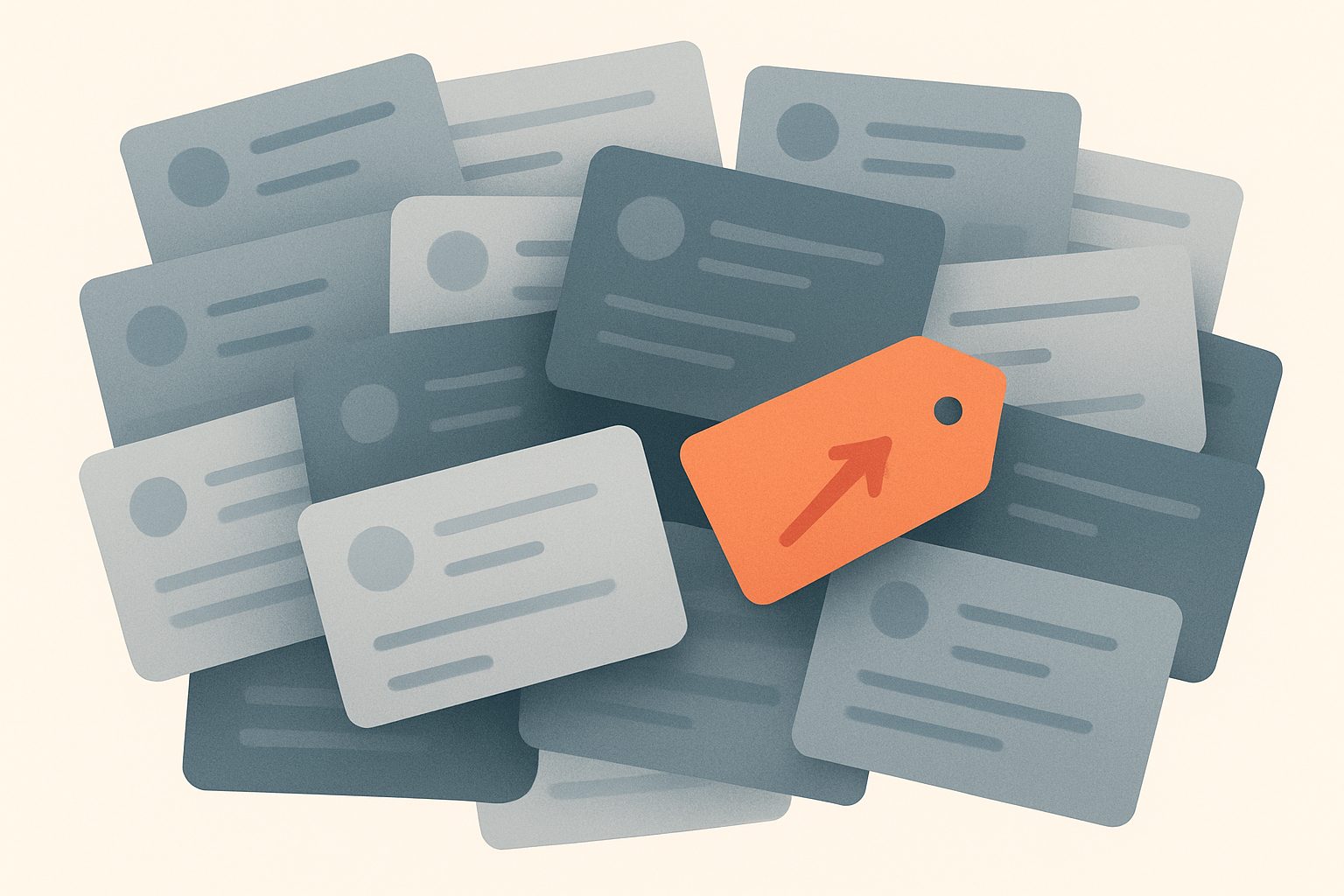
The people who most need a structure for this are the ones who believe they “review everything.” An increase that was never seen cannot be reviewed, and it was not seen because it arrived as one line in an email during a busy week. The fix is not more discipline; it is a structure that surfaces the date regardless of attention. A calendar event that says “X renews at $Y” on the day of the increase, created the moment the email arrives, beats any amount of good intention.
Two places it hides better
The first is the shared plan. One person pays, the price goes up, and the other people using the service never hear about it because the notice went to the one cardholder. That asymmetry is the subject of family plans and the one person who pays: the hike lands on a single person who quietly absorbs it, and the group carries on as if nothing changed. The payer is the only one who will ever see the increase, so the payer is the only one who can raise it with the group.
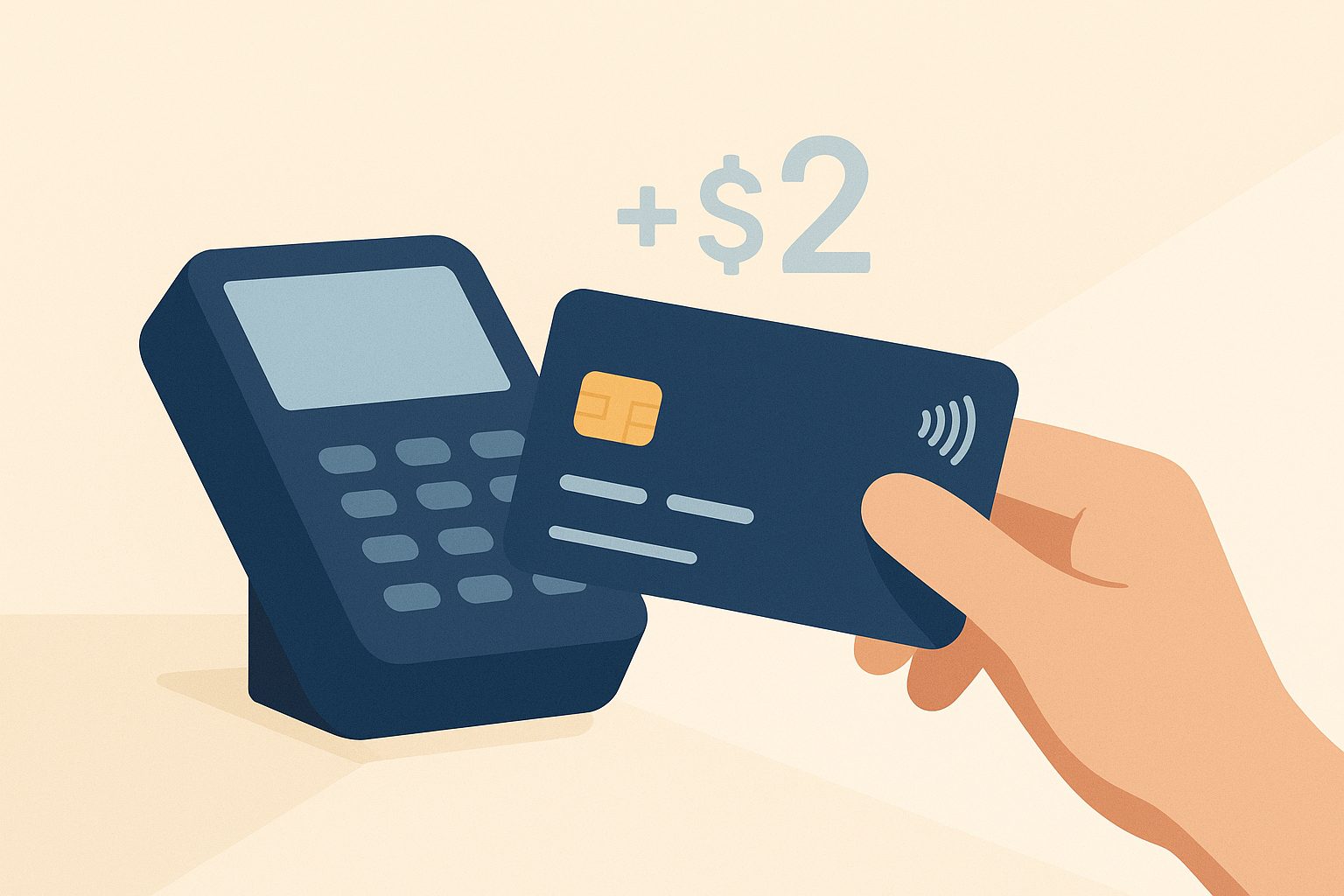
The second is the annual plan, because a yearly charge concentrates the pain into one large number that is easy to rationalize. A $10 monthly service that goes to $12 is a $2 difference that registers. A $120 annual plan that goes to $144 is a $24 difference buried inside a single bigger figure, and the renewal email is more likely to be skimmed because the amount was already “big.” The relative increase is identical, 20 percent in both cases; the framing makes one of them invisible, which is part of what paying annually actually saves and part of what it costs.
A subscription price increase is not a scam. It is a routine business decision dressed as a notification, and on the app stores it is a notification with rules attached. The reliable defense is to route every one of those notifications into a single place where the date and the number are visible, and to make the “worth it now?” call at the moment the email arrives rather than after the charge has cleared. Prices will keep rising. Being the last to know that yours did is the only part that is optional.
Related reading
Most Subscriptions Have No Turn Off Auto-Renew Button
How to turn off auto-renew on nine subscriptions: most make you cancel, Microsoft has a real off switch, and Adobe charges 50% to leave.
Which Gift Cards Actually Stop a Subscription From Auto-Renewing
Compare gift-card renewal rules for seven services, including saved-card billing, prepaid-plan exceptions, and what to check before redeeming credit.
When Every Subscription Renews in the Same Month
Annual plans renew on the signup anniversary, so one busy month becomes a future month where everything is due. Which services let you move the date, checked.
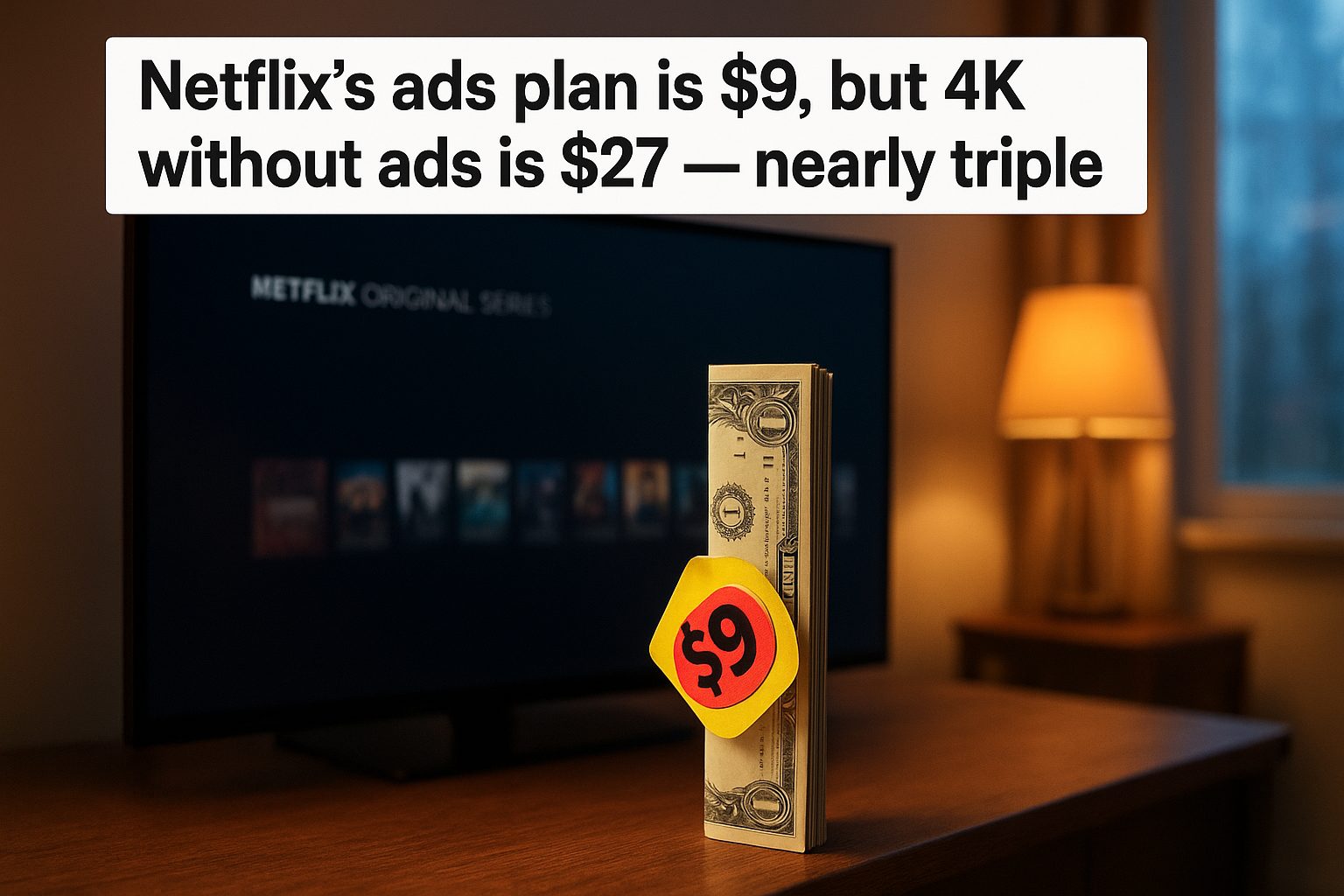
Streaming Prices: Compare Ads, 4K and the Plan You Need
Compare US streaming prices, ad-free upgrades, 4K and screen limits with official sources, verification gaps, and a worksheet for your annual viewing budget.